Botany


Photo:

Bitter cherry bark


Bitter cherry flowers


Bitter cherry drupes


Scientific Name:

Prunus emarginata

Common Names:

Bitter Cherry, Oregon Cherry

Traditional Names:


Family:

Rosaceae


Characteristics:

  • Bitter cherry is a deciduous shrub or small tree growing to 1–15 metres all with a slender oval trunk with smooth gray to reddish-brown bark with horizontal lenticels.
  • The leaves are long, thin, egg-shaped, and yellowish-green with unevenly sized teeth on either side.
  • The flowers are small, with five white petals and numerous hairlike stamens; they are almond-scented, and produced in clusters in spring, and are pollinated by insects.
  • The fruit is a juicy red or purple cherry, which, as the plant's English name suggests, are bitter.
  • As well as reproducing by seed, it also sends out underground stems which then sprout above the surface to create a thicket.


Habitat:

  • Bitter cherry is native to western North America, from British Columbia south to Baja California, and east as far as western Wyoming and New Mexico.
  • It is often found in recently disturbed areas or open woods on nutrient-rich soil.


Medicinal


Parts Used:

  • Bark


Collection and Harvesting:

  • The inner bark of the branches or root is harvested in the midsummer or fall (when the cyanogenic compounds are lower) and dried immediately for later use in a tea or extracted in a syrup or tincture.
  • Harvest branches of smaller trees and use a knife or vegetable peeler to peel off the thin outer and inner bark, as opposed to harming a larger tree by taking the bark off its trunk.
  • Once harvested, dry bark immediately in a food dehydrator to ensure fermentation does not begin.


Constituents:

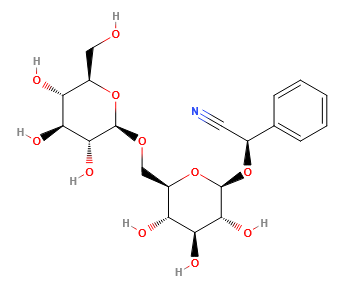
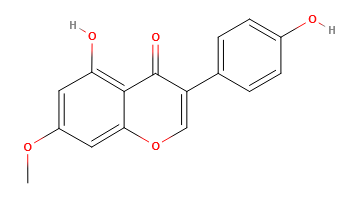
  • The active constituents in bitter cherry include cyanogenic glycosides (prunasin and amygdalin), prunetin, flavonoids, benzaldehyde, volatile oils, plant acids, and tannins.
  • d-Prunasin undergoes hydrolysis in the presence of the enzyme prunase, usually present in the bark itself, to yield benzaldehyde, glucose and hydrocyanic acid.
    • prunasin
    • Prunasin

    • amygdalin
    • Amygdalin

    • prunetin
    • Prunetin


Actions:

  • Bitter cherry has expectorant, antitussive, astringent, antispasmodic, anti-inflammatory, bitter, and nervine actions.
  • Prunetin is an allosteric inhibitor of human liver aldehyde dehydrogenase.


Indications:

  • Bitter cherry is used as a remedy for coughs and for opening the lower respiratory system. Its sedative action is helpful for easing the cough reflex and calming irritating coughs. It is a great remedy for respiratory infections when there is a lot of mucus, coughing, and constricted airways that making breathing difficult. Due to its astringent, sedative, antispasmodic, and bronchodilator actions, it dries mucus, increases expectoration, eases coughing, and opens the airways. By soothing the respiratory apparatus, it increases expectoration. It is especially helpful for coughs that make it difficult to sleep through the night, and is nice in a cough syrup for this purpose. It can be used in the case of bronchitis, whooping cough, and croup. It is also helpful for relieving unproductive, irritating coughs that linger after an infection is over.
  • Its cooling and anti-inflammatory action is helpful for inflammatory conditions such as acute and chronic sinus inflammation and allergies.
  • Bitter cherry is also a nourishing, tonifying, and strengthening remedy for the heart, also alleviating cardiac irregularities and palpitations (similar to the effects of Crataegus [Hawthorn]). Bitter cherry's nervine, sedative action helps slow circulation and heart rate, relieving palpitations and arrhythmia.
  • By repairing irritation in the capillaries, the anti-inflammatory flavonoids in bitter cherry eliminate circulatory congestion and heat, redness, tenderness, and rapid heartbeat; together with cyanogens, which reduce cellular heat, flavonoids exert a noticeable cooling effect. This temperature regulation action can also be helpful in the case of fever. Bitter cherry has a dual nature in that it can also be warming to those with cold skin and poor circulation to the extremities.
  • Bitter cherry is also a remedy for digestive upset thanks to its antispasmodic action, ability to soothe irritated mucosal tissues, and its digestion-stimulating bitter taste. Its sedative, anti-inflammatory, and astringent actions are helpful in calming the digestive tract, reducing inflammation and irritation, and reducing water volume in stool.


Combinations:

  • Bitter cherry is appropriate for use in combination with other herbs to control asthma.
  • To make an elderberry, echinacea and wild cherry throat syrup, use:
    • 3 tbsp. elderberries
    • 2 tbsp. rosehips
    • 2 tbsp. bitter cherry bark
    • 2 tbsp. Echinacea purpurea root
    • 1 tbsp. mullein leaf
    • 1 tbsp. licorice root
    • 1 cinnamon stick, broken into pieces
    • 1 tsp. ginger root
    • 1 pint raw, local honey
    • brandy (optional preservative)
  • Mix herbs and spices together in a pot and combine with 1 quart of water. Soak for 2 to 3 hours. Heat at a low simmer until mixture has been reduced to approximately half its original volume (1 pint). Remove from heat and strain out herbs. Return strained liquid to pot. Add honey. Gently heat mixture over low heat until honey warms enough so that mixture can be thoroughly stirred together. Once mixed, remove from heat and allow to cool. Optional: To help preserve and extend shelf life, measure out a quantity of brandy that is 15 to 20% of the volume of the syrup. Stir into cooled syrup. Pour into clean bottles and store in refrigerator. Syrup will last for several weeks to several month.


Preparation and Dosage:

  • Tincture: 1-2 ml (1:5 in 40%) 3x per day
  • Hot Decoction: 1 teaspoon dried bark per cup boiling water, simmer 10-15 minutes, 3x per day
  • Cold Infusion: To prepare a cold infusion, add 1 ounce of bark to 2 cups of cold water and let stand a few hours. Take 1 to 4 fluid ounces, 4 or 5x per day


Contraindications:

  • The fermented bark and leaves of bitter cherry are toxic, so never harvest these from the ground. Once harvested, peel and dry bark immediately in a food dehydrator to ensure fermentation does not begin.
  • Theoretically, large doses of bitter cherry bark are toxic, presumably due to the cyanogenic glycosides, which are metabolized into hydrocyanic acid (cyanide). Cyanogenic glycosides are present in many rose family plants, including apple seeds, peach pits, hawthorn seeds, and cherry bark; however, the body is able to readily detoxify low levels of hydrocyanic acid and thus bitter cherry can be used safely, even in children.


Drug Interactions:


Additional


History and Origin:

  • From ancient times the cherry has been associated with virginity, the red colored fruit with the enclosed seed symbolizing the uterus.
  • Buddhism teaches that Maya, the virgin mother of Buddha, was supported by a holy cherry tree during her pregnancy.
  • In Danish folklore, a good crop of cherries was insured by having the first ripe fruit eaten by a woman shortly after her first child was born.
  • Many myths used cherries as symbols of both education and concealment.
  • Used for hundreds of years for its medicinal benefits, cherry bark tea has been prescribed by ancient herbalists for any number of ailments. While the First Nations utilized tea brewed from the inner bark of the bitter cherry tree to help assist with lung ailments as well as diarrhea, ancient Chinese herbalists used it as a remedy for coughs.


Ethnobotany:

  • Bitter cherry was employed medicinally by several First Nations tribes who used it to treat a variety of complaints.
  • The Kwakwaka'wakw, among others, used bitter cherry for medicinal purposes, such as poultices and bark infusions.
  • It is little, if at all, used in modern herbalism.
  • The bark is blood purifier, cardiac, laxative and tonic. An infusion of the bark has been used in the treatment of tuberculosis and eczema.
  • A decoction of the root and inner bark has been taken daily as a treatment for heart troubles.
  • An infusion of the bark, combined with crab apple bark (Malus spp) has been used as a cure-all tonic in treating colds and various other ailments.
  • The bark, stuck on with resin, has been used as a dressing for wounds, swellings etc.
  • An infusion of the rotten wood has been used as a contraceptive.
  • Although no specific mention has been seen for this species, all members of the genus contain amygdalin and prunasin, substances which break down in water to form hydrocyanic acid (cyanide or prussic acid). In small amounts this exceedingly poisonous compound stimulates respiration, improves digestion and gives a sense of well-being.
  • Some First Nations tribes saw the fruit as a great delicacy and an important food source, though others only ate it occasionally because of its bitter taste. The fruit can be made into jam, although it is said to require a 1:10 ratio with sugar to make it palatable.
  • A green dye can be obtained from the leaves. A dark grey to green dye can be obtained from the fruit.
  • The bark is used to ornament baskets and is also split into strips and used for making baskets that are watertight and resist decay. The bark is both strong and flexible as well as being ornamental. The thin outer bark can be peeled off the tree in the same way as birch trees. It has been used to make baskets, mats, ropes and as an ornament on bows, arrows etc. The bark can also be made into a string.
  • The wood is close-grained, soft, brittle. It is sometimes used for furniture because it takes a high polish. It is an excellent fuel.


Growing Information:

  • Bitter cherry has hybridized with the introduced European Prunus avium in the Puget Sound area; the hybrid has been named Prunus × pugetensis. It is intermediate between the parent species, but is nearly sterile, producing almost no cherries.
  • The seed requires 2 - 3 months cold stratification and is best sown in a cold frame as soon as it is ripe. Sow stored seed in a cold frame as early in the year as possible. Protect the seed from mice, etc. The seed can be rather slow, sometimes taking 18 months to germinate.
  • Prick out the seedlings into individual pots when they are large enough to handle. Grow them in a greenhouse or cold frame for their first winter and plant them out in late spring or early summer of the following year.
  • Cuttings of half-ripe wood with a heel can be planted in July/August in a cold frame.
  • Softwood cuttings from strongly growing plants in spring to early summer can be planted in a cold frame.


Personal Impressions and Experiences:


Historical Botanical Illustrations:

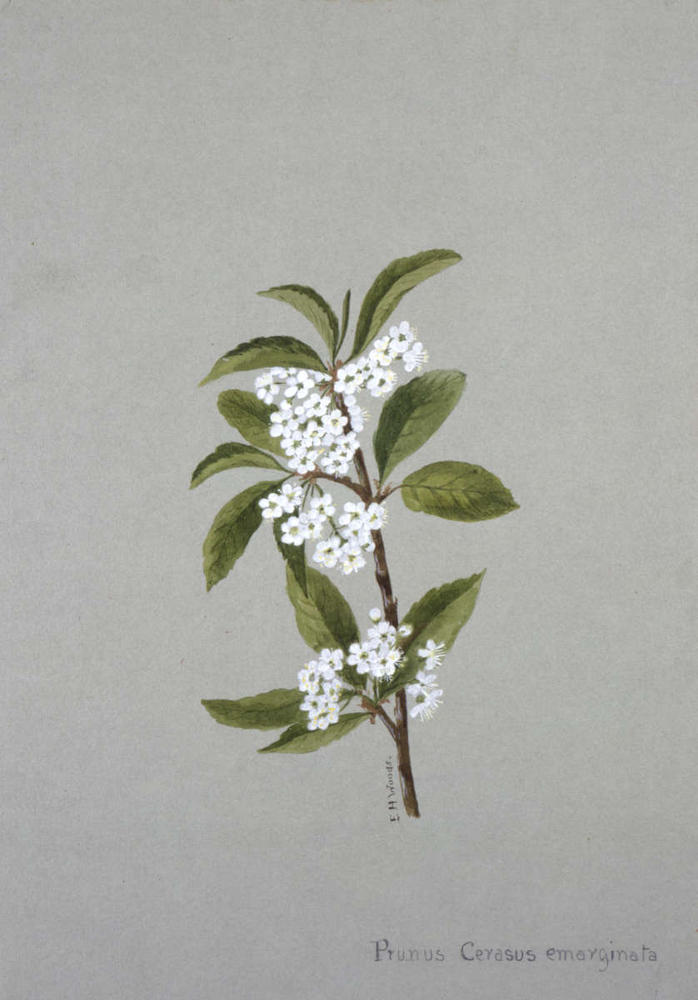
Bitter cherry illustrations


Painting by Emily Henrietta Woods, 1852-1916