Botany


Photo:

Flax


Flax


Scientific Name:

Linum usitatissimum

Common Names:

Flax, Flaxseed, Linseed

Traditional Names:


Family:

Linaceae


Characteristics:

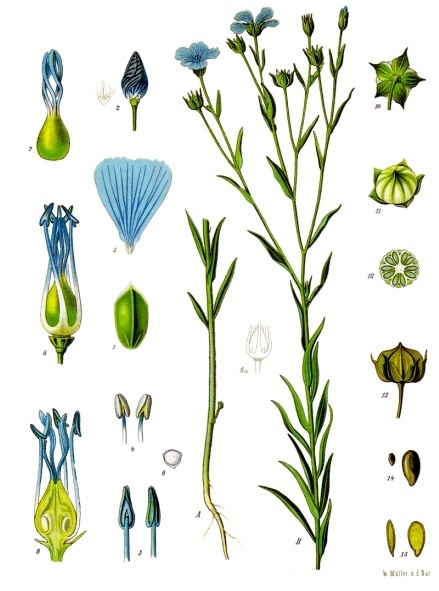
  • Flax is an annual and grows from 20 to 150 cm high. The root is short, fusiform and light yellow. The stem is unbranched, erect or ascending. The leaves are smooth edged, gray-green, sessile and almost awn-like.
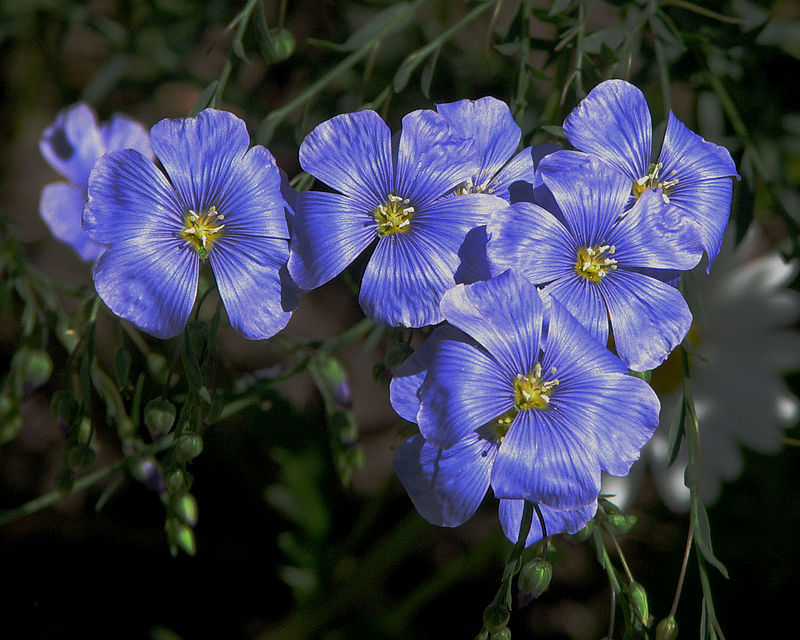
  • The flowers are panicle-like loose cymes on long peduncles in the leaf axils of the upper part of the stem. They have 5 petals, which are sky blue and longer than the sepals. There are 5 stamens fused at the base and 1 ovary.
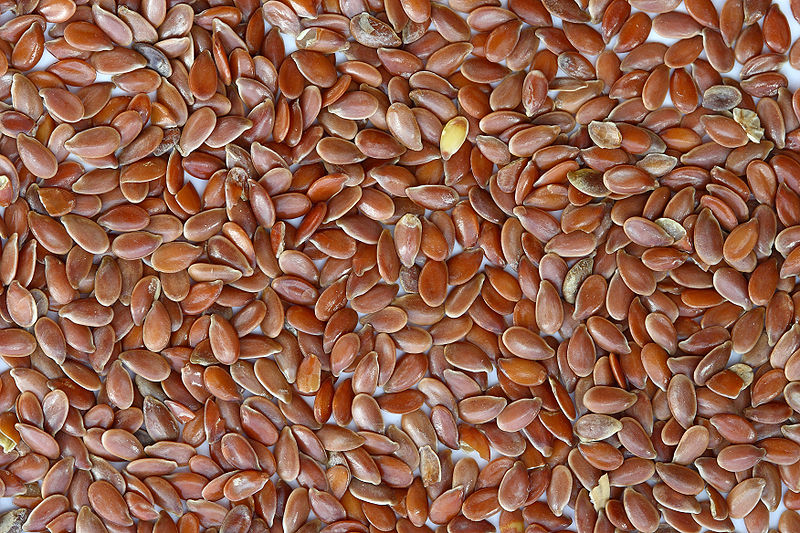
  • The fruit is an almost globular, 6 to 8 mm long capsule on an erect or slightly bent stem. The seeds are flat, brown and glossy.
  • Flax flowers only in the morning.


Habitat:

  • Flax is cultivated in temperate and tropical, regions the world over.


Medicinal


Parts Used:

  • The medicinal parts are the stem as a sterile linen thread (wound suturing), the oil extracted from the seeds, the dry ripe seeds, the linseed cakes, and the fresh flowering plant.


Collection and Harvesting:

  • Flaxseed consists of the dried, ripe seed of Linum usitatissimum, as well as its preparations.
  • The ripe seeds are recovered from the capsules by threshing.
  • The oil contained within the seeds is perishable. Processing of the seeds should take place by cold pressing at a temperature below 40° C.


Constituents:

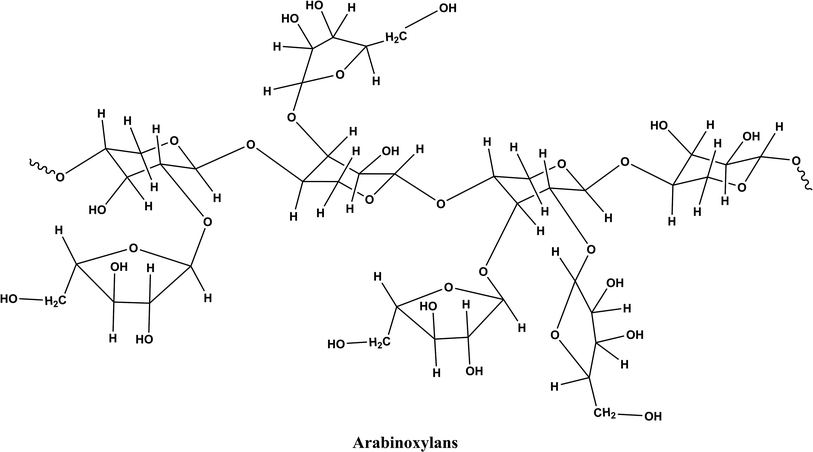
  • Mucilages, including arabinoxylans, galactans, rhamnogalacturonans
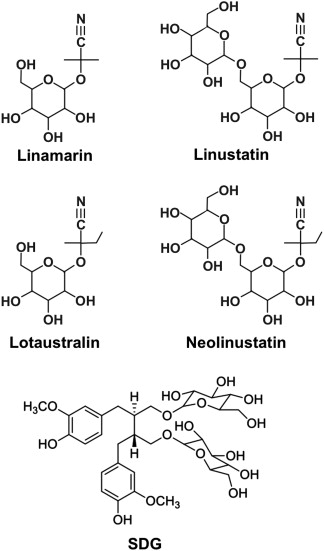
  • Cyanogenic glycosides - linustatin and neolinustatin
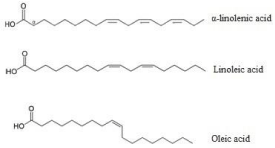
  • Fatty acids - linolenic acid, linoleic acid, and oleic acid
  • Lignans - secoisolariciresinol-diglucoside (SDC)
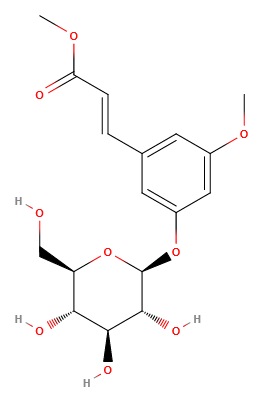
  • Phenylpropane derivatives, including linusitamarine
    • arabinoxylans
    • arabinoxylans
    • fatty acids
    • linusitamarine
    • Linusitamarine


Actions:

  • Demulcent, antitussive, laxative, emollient
  • The bulk material and mucins (swelling agent and mucilage) are responsible for the laxative effect.
  • Reduction of cholesterol levels in the liver was observed (due to the unsaturated fatty acids).
  • Flax also lowers blood sugar.
  • Flax has an antitumoral effect attributed to the lignans (lignans are antimycotic, anti-oxidative and anti-estrogenic).


Indications:

  • May be used in all pulmonary infections, especially bronchitis with much catarrh formed.
  • It is often used as a poultice in pleurisy and other pulmonary conditions.
  • As a poultice it can be used for boils, carbuncles, shingles and psoriasis.
  • Flax may be used as a laxative to relieve constipation.
  • Flax can be used for inflammation of the skin.


Combinations:

  • As a poultice for the chest, flax combines well with mustard.
  • For boils, swellings and inflammation it combines with marshmallow root and slippery elm.


Preparation and Dosage:

  • Decoct flaxseeds for 20 minutes.
  • To prepare a demulcent for use in gastritis and enteritis, allow 5 to 10 g of whole seeds to stand in cold water for 20 to 30 minutes, then pour off the liquid.
  • For constipation, use1 tsp of whole or bruised (not ground) seed with at least 150 ml of liquid 2 to 3 times daily.
  • To lower cholesterol, use 35 to 50 g daily of the crushed seeds. May be incorporated into muffins or breads.
  • For decrease platelet aggregation, use 1 to 2 tbsp flaxseed oil daily.
  • For gastritis and enteritis, use 2 to 4 tbsp of milled linseed (the seeds should not be taken in the dry state, but should be pre-hydrated as a decoction).
  • For external application, use 30 to 50 g flaxseed flour for a hot moist cataplasm or compress.


Contraindications:

  • Flaxseed is contraindicated in the following conditions: ileus, stricture of the esophagus and/or in the gastrointestinal area, and acute inflammatory illnesses of the intestine, of the esophagus and/or of the stomach entrance.


Drug Interactions:

  • The absorption of other drugs taken simultaneously may be delayed.


Additional


History and Origin:

  • Common flax was one of the first crops domesticated by man.
  • Flax is thought to have originated in the Mediterranean region of Europe; the Swiss Lake Dweller People of the Stone Age apparently produced flax utilizing the fiber as well as the seed.
  • Linen cloth made from flax was used to wrap the mummies in the early Egyptian tombs.
  • In the United States, the early colonists grew small fields of flax for home use, and commercial production of fiber flax began in 1753.
  • However, with the invention of the cotton gin in 1793, flax production began to decline.
  • Medicinal properties of flax seed were known by Ancient Greeks, with Hippocrates recommending them for inflammation of the mucous membranes.
  • In 8th century France, Charlemagne passed laws requiring the seeds to be consumed to keep his subjects healthy.


Ethnobotany:

  • Flax is used in India as a tea for coughs, bronchial conditions, urethritis, diarrhea and gonorrhea, and externally for skin infections. The seeds are also used in Indian veterinary medicine.


Growing Information:

  • Flax likes full sun and cool weather.
  • Flax prefers rich soil. Mix in compost when planting, if the soil is not rich. Keep the soil moist, not wet.
  • Sow seeds outdoors as soon as the soil is workable, and when you know temperatures will remain above freezing. The seedlings can be sensitive to spring frost.
  • To make them easier to spread, mix the seeds with flour. Then sow one tablespoon of seeds per 10 square feet, or about 40 plants per square foot, scattering them evenly across the soil. Rake the seeds down into the soil, to 1/4- to 1/2-inch deep.


Personal Impressions and Experiences:

  • Flax grows well in Port Neville.


Historical Botanical Illustrations:

Flax illustrations


Plate from Franz Eugen Köhler, Köhler's Medizinal-Pflanzen