Botany


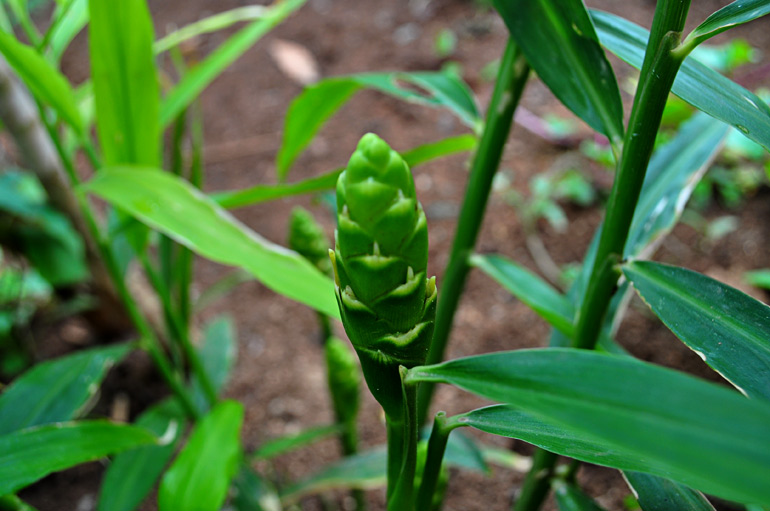
Photo:

Ginger


Ginger


Scientific Name:

Zingiber officinale

Common Names:

Ginger, Common Ginger, Cooking Ginger, Canton, Stem Ginger, Canton Ginger

Traditional Names:


Family:

Zingiberaceae


Characteristics:

  • Ginger is a creeping perennial on a thick tuberous rhizome, which spreads underground. In the first year, a green, erect, reed-like stem about 60 cm high grows from this rhizome. The plant has narrow, lanceolate to linear-lanceolate leaves 15 to 30 cm long, which die off each year.
  • The flower scape grows directly from the root and terminates in a long, curved spike. A white or yellow flower grows from each spike.


Habitat:

  • The plant is indigenous to southeastern Asia, and is cultivated in the U.S., India, China, the West Indies and tropical regions.


Medicinal


Parts Used:

  • Rhizome


Collection and Harvesting:

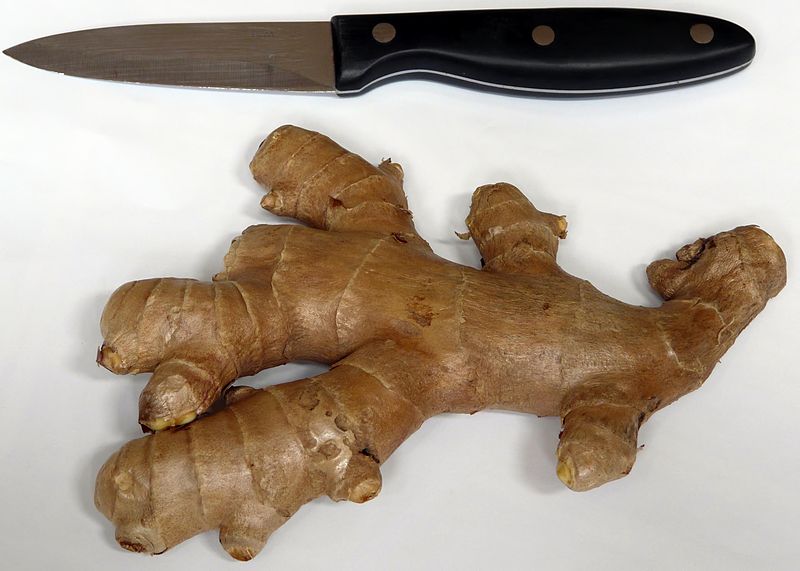
  • Ginger root consists of the peeled, finger-long, fresh or dried rhizome.
  • Powdered ginger root should be stored in a cool, dry place protected from light. Powdered ginger should not be stored in plastic containers.


Constituents:

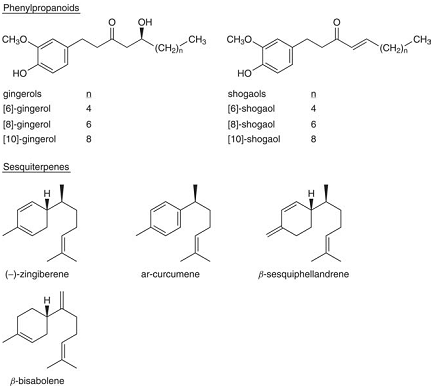
  • Volatile oil primarily containing the sesquiterpenes zingiberene and b-bisabolene; oleoresin containing gingerols, gingerdiols, gingerdiones, dihydrogingerdiones, shogaols; lipids.
    • ginger constituents


Actions:

  • Ginger has stimulant, carminative, antispasmodic, diaphoretic, emmenagogue, and rubefacient, anti-ulcer, anti-emetic, hypolipidaemic, analgesic, antimicrobial, antiparasitic, antifungal, antiviral, antioxidant, immunomodulatory, hepatoprotective, nephroprotection, chemoprotective, antihistamine, anxiolytic, antifibrotic, and thermogenic activities.
  • Ginger also has hypoglycemic, hypotensive, hypertensive, antihypercholesterolemic, cholagogic, and and stomachic properties.
  • Ginger causes a reduction in platelet aggregation.
  • Ginger demonstrates anti-inflammatory effects in rheumatoid arthritis due to a dual inhibition of cyclooxygenase and lipoxygenase.
  • Ginger also has an ability to inhibit the actions of prostaglandins.


Indications:

  • Used as a treatment for motion sickness.
  • Ginger may be used as a stimulant to increase circulation, and is effective for bad circulation, chilblains, and cramps.
  • Useful as a diaphoretic, promoting perspiration in feverish conditions.
  • As a gargle, it relieves sore throats.
  • Externally, it can be used to treat fibrositis and muscle sprains.
  • As a carminative, it may be used to promote gastric secretion and assist with dyspepsia, flatulence and colic.


Combinations:

  • Immune-boosting ginger-turmeric tea: To 2 cups water add 1/2 teaspoon ground turmeric, 1/2 teaspoon chopped fresh ginger, 1/2 teaspoon ground cinnamon (optional). Simmer for 10 minutes, then add 1 tablespoon honey and a squeeze of lemon.


Preparation and Dosage:

  • Decoct for twenty minutes if using dried root.
  • For fresh root, grate and infuse. Infuse because it is so full of volatile oils that it is one root that infuses well.
  • Tincture dose is 1.5 to 5 ml three times a day (1:5 in 40%).
  • To make an infusion, pour 1 cup of boiling water over 1 teaspoon of fresh root and infuse for 5 minutes. Drink whenever needed.
  • Fluid extract dosage is 0.25 to 1 ml three times a day (1:1 in 40%).


Contraindications:

  • Ginger may influence bleeding times and immunological parameters because it inhibits thromboxane synthase and acts as a prostacyclin agonist. Large doses (12 to 14 g) may enhance the effects of anticoagulant drugs.
  • Ginger should not be used to alleviate the morning sickness of pregnancy.


Drug Interactions:

  • It is recommended that patients taking anticoagulants or those with bleeding disorders avoid the use of large doses of ginger.


Additional


History and Origin:

  • Ginger (Zingiber officinale) was considered a luxury more than 5,000 years ago.
  • The Indians and ancient Chinese used the root of ginger as a tonic to treat common ailments. Although ginger originated in Southeast Asia, it was widely cultivated in other countries.
  • By the 1st century, traders had taken ginger into the Mediterranean regions.
  • Eventually, it became a popular spice in Rome. Unfortunately, the use of ginger fell from use once the Roman Empire fell. At this point, ginger's worth had increased.
  • It was commonly used to make delicacy sweets in the medieval times.
  • Ginger has been traded throughout history longer than most other spices.
  • It was valued for its medicinal merits: it is a popular warming spice, a digestive aid, and sometimes used to treat flatulence and colic.


Ethnobotany:

  • In folk medicine. ginger is used as a carminative, expectorant, and astringent.
  • In China, ginger is used to treat colds, nausea, vomiting and shortness of breath.
  • In Indian medicine, ginger uses include anorexia, dyspeptic symptoms and pharyngitis.


Growing Information:

  • Go to your local grocery store and buy a ginger root from the produce section. Choose a healthy, plump looking ginger root that is about 4 to 5 inches long with at least a few "fingers." If possible, find a ginger root where the tips of the fingers are greenish.
  • Ginger plants take 10 months to mature. If you live in zone 7 or higher, you can grow ginger root in the ground (though in all zones but zone 10, the leaves will die in the winter). If you live in zone 6 or lower, you'll need to bring your ginger plant in for the winter, which means you will need to plant the ginger root in a pot.
  • Ginger root grows in part to full shade and likes rich, loose soil. If you'll be planting ginger in the ground, it's a good idea to add lots of compost or rotted manure to the chosen spot. If you will be growing ginger in containers, use potting soil.
  • Plant the ginger root in the early spring, after all chances of frost have passed. Break or cut off a finger and make sure the section is at least 1 to 2 inches long and has at least one of the buds (looks like a rounded point) on it. To help prevent rot in the ginger root, allow the cut pieces to dry for a day or two in a warm, dry place before putting them in the ground. Plant the ginger sections in a shallow trench. Don't plant the ginger root sections any deeper than 1 inch. As the ginger plant grows, the root may push back up through the top of the soil. It's common for ginger plants to have roots above soil. Plant one ginger plant per square foot.
  • Once the ginger root is planted, water it thoroughly. In a week or two you'll see the leaves begin to emerge. After the leaves have emerged, water sparingly, but deeply.
  • The leaves on the ginger plant will get to be up to 4 feet tall and are susceptible to wind damage.
  • If you live in an area where ginger will not survive the winter, bring the ginger plant inside once night time temperatures dip below 10°C. Continue to care for the plant over the winter.


Personal Impressions and Experiences:


Historical Botanical Illustrations:

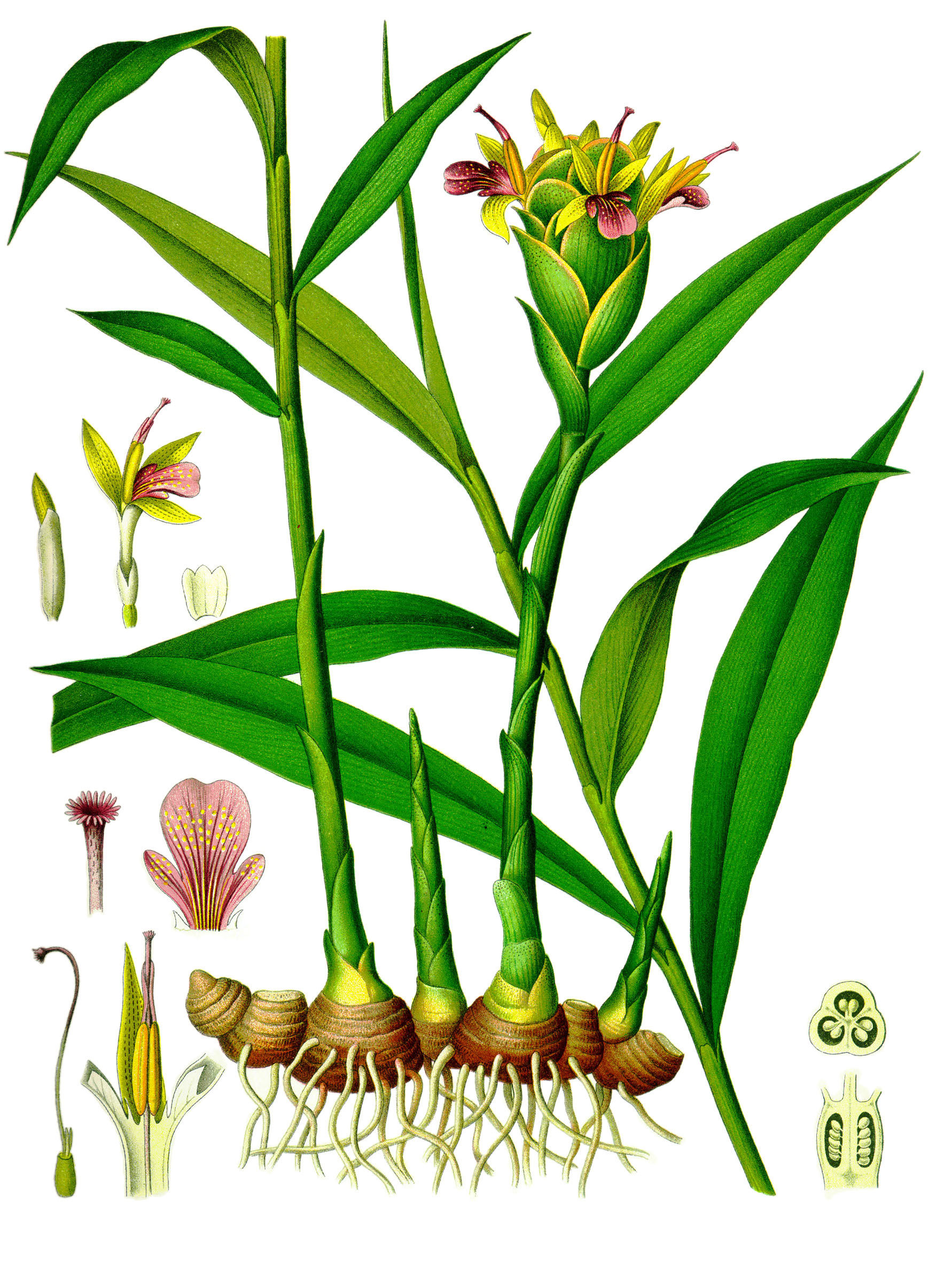
Ginger illustrations


1896 color plate from Köhler's Medicinal Plants