Botany


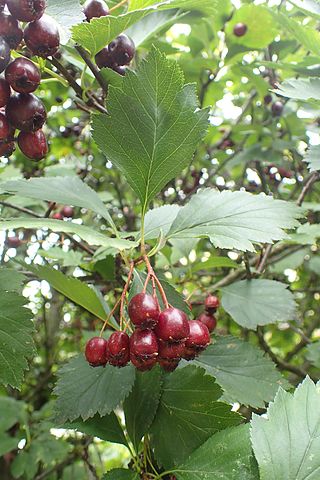
Photo:

Hawthorn


Scientific Name:

Crataegus laevigata, Crataegus monogyna, Crataegus douglasii

Common Names:

English Hawthorn, Black Hawthorn (native species), Haw, May, Whitethorn, Hawthorn

Traditional Names:


Family:

Rosaceae


Characteristics:

  • Hawthorn is a bulky shrub or small tree, 1.5 to 4 m high with hard wood and usually thorny branches.
  • The leaves have many forms. They are shallow, 3 to 5 lobed, with the lobes pointed forward. The leaves are unevenly serrate, obovate, yellowish-green, and glossy.
  • The white flowers are in richly-blossomed cymes. The petals are usually separate, orbicular, crenate, white or occasionally red. There are 10 to 20 stamens and 1 to 5 carpels, which are more or less fused to the receptacle. There are 2 ovules, the upper one is sterile and covers the lower fertile one like a cap. There is 1 seed in each chamber.
  • The false fruit is ovoid or globose and crowned by the remains of the sepals. It is red, black, or yellow and mealy.


Habitat:

  • Hawthorn is indigenous to northern temperate zones of Europe, Asia, and North America.


Medicinal


Parts Used:

  • Fruit, leaf, flower


Collection and Harvesting:

  • Hawthorn consists of the leaves and flowers of Crataegus laevigata and occasionally other species. The medicinal parts of the Hawthorn plant are collected in the wild and dried at room temperature.


Constituents:

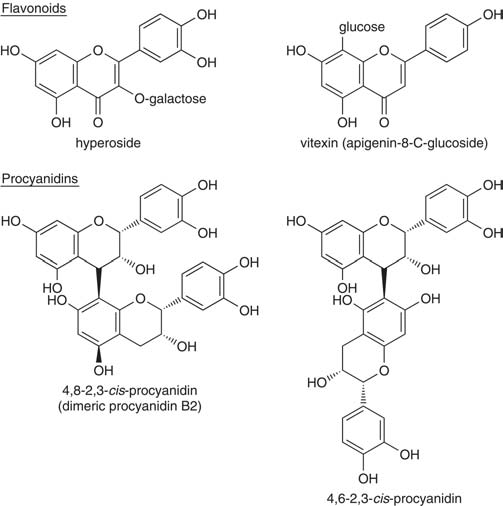
  • Hawthorn contains flavonoids (flavonol [e.g. kaempferol, quercetin] and flavone [e.g. apigenin, luteolin] derivatives, rutin, hyperoside, vitexin glycosides, orientin glycosides; the fruits contain relatively more hyperoside and the leaves relatively more vitexin glycosides), tannins (proanthocyanins [catechin-type oligomers]), cyanogenetic glycosides and saponins.


Actions:

  • Hawthorn fruit is stated to possess cardiotonic, coronary vasodilator and hypotensive properties.


Indications:

  • Traditionally, hawthorn has been used for cardiac failure, myocardial weakness, paroxysmal tachycardia, hypertension, arteriosclerosis and Buerger's disease.
  • Modern interest in hawthorn is focused on the use of hawthorn leaf with flower in reduced cardiac performance.
  • Cardiovascular activity has been documented for hawthorn and attributed to the flavonoid components, in particular the procyanidins.
  • Unproven Uses:
    • In folk medicine, hawthorn is also used as a cardiotonic, for hypertension, ischemia of the heart, arrhythmia and as a sedative.
    • Hawthorn has a high flavonoid content and is used to prevent collagen destruction in joints and decrease inflammation and decrease the fragility of capillaries.
    • Hawthorn has shown some effectiveness in lowering cholesterol levels in at least one study.
    • Several extracts from different componants of the plant have demonstrated antioxidant effects.
  • Chinese Medicine: In China, hawthorn is used to reduce food stagnancy and blood stasis.
  • Homeopathic Uses: Therapeutic dilutions are used for cardiac insufficiency, senile cardiac insufficiency, dysrhythmia, and angina pectoris.


Combinations:

  • Hawthorn berry conserve: This conserve makes a tasty excuse for incorporating hawthorn — a heart tonic — into your diet. Ingredients are dried seedless hawthorn berries, apple juice, honey, ginger (grated or powdered), and cinnamon. Chopped oranges, dried cranberries, and chopped walnuts may also be added to the conserve. Place the hawthorn berries in a pan with just enough apple juice to cover them. Simmer over low heat for 15 minutes. Cover and let sit overnight. Sweeten with honey, ginger, and cinnamon to taste. Store in the refrigerator, where the conserve will keep for 2 to 3 weeks.
  • Tension-Free Formula: This formula can be helpful in cases of muscle spasm, heart arrythmia, and anxiety. Ingredients: 2 parts valerian root, 1 part hawthorn berry (or berry, leaf, and flower), 1 part lemon balm leaf. To make the formula, prepare an infusion of the herbs using 1 to 2 ounces of herb per quart of water, and letting the herbs steep for at least 45 minutes or even overnight. Alternatively, tincture the herbs in 80-proof alcohol.
  • Nutritive Tonic Berry Tea: These berries make an antioxidant-rich, heart-healthy tea that is delicious enough to drink on a daily basis. Ingredients: 2 parts dried elderberry, 2 parts dried rose hip, 1 part dried blueberry, 1 part dried hawthorne berry, honey (optional), lemon juice (optional). To make the tea blend, combine the berries and rose hips. Infuse, using 1 tablespoon of tea blend per cup of water. Add honey and a bit of lemon juice, if desired. Drink ½ to 1 cup once or twice daily to nourish the body and support heart health.


Preparation and Dosage:

  • Dried fruit: 0.3–1.0 g as an infusion three times daily.
  • Liquid extract: 0.5–1.0 mL (1 : 1 in 25% alcohol) three times daily.
  • Tincture: 1–2mL (1 : 5 in 45% alcohol) three times daily.
  • Leaf with flower for the treatment of decreasing cardiac efficiency: 160–900 mg aqueous-alcoholic extract (ethanol 45% v/v or methanol 70% v/v)daily, in two to three divided doses.


Contraindications:

  • Can interfere with cardiac, hypertensive, and hypotensive therapies.
  • Hawthorn is contraindicated in children under 12 years of age.
  • Use of Hawthorn during the first trimester of pregnancy is contraindicated.


Drug Interactions:

  • Hawthorn may potentiate the effects of cardiac glycosides. If hawthorn therapy is initiated in patients taking digoxin, digitoxin or g-strophanthin, the dosage of standard cardiac glycosides should be adjusted downward.
  • Hawthorn may cause a hypertensive effect when used in combination with beta-blockers.
  • Because hawthorn has an action similar to Class III antiarrhythmics, use with other antiarrhythmics should be discouraged.
  • Hawthorn has been found to inhibit the inward flow of potassium channels resulting in an increased action potential in cardiac ventricular cells. Drugs that act in a similar manner such as cisapride are likely to interact with hawthorn and should therefore not be taken in conjunction with hawthorn.


Additional


History and Origin:

  • Historically, hawthorn species were used for building hedges and many cultivars have adorned ornamental English gardens.
  • The common name hawthorn comes from an Anglo-Saxon word haguthorn that is translated into "a fence with thorns."
  • The English affinity for hawthorns extends to the traditional use of its beautiful blossoms in May Day celebrations and to poetry where the tree often symbolizes the spirit of spring.


Ethnobotany:

  • First Nations utilized many parts of this plant. Its strong wood was fashioned into digging sticks and handles for tools and weapons.
  • The genus name Crataegus is taken from the Greek word kratos that means "strength."
  • The razor-sharp thorns were used for piercing ears, lancing boils and making fish hooks.
  • The bark and shoots were burned and mixed with ashes and grease to concoct black face paint for ritual purposes.
  • Hawthorn berries are best gathered as soon as they ripen. Watch out for the fruit's cherry-sized pit! They can be eaten right off the tree or collect a basketful for baking. The succulent berries are excellent for jellies, jams, pies and tarts.
  • Black Hawthorn is said to have been used traditionally by Native Americans to strengthen the heart and thin the blood. The bark contains properties that are said to be beneficial for reducing inflammations and alleviating venereal diseases, diarrhea and dysentery.


Growing Information:

  • If you are interested in growing this tree, start by gathering the clusters of fruit in early fall. The berries should then be placed in a tub of water and macerated until the flesh is separated from the seeds. Most of the viable seeds should sink to the bottom while the rest of the fruit floats on top. Remove the seeds, clean them and lay them out to dry at room temperature for several weeks. The seeds will require some pre-treatments before germination will occur. The thick endocarp on the seed coating requires a treatment with acid. Depending on the thickness, the seeds should be soaked for at least half an hour and possibly up to 3 hours in an acidic solution. The seeds can then be placed in a moist medium and cold stratified at low temperatures for 3 to 4 months.


Personal Impressions and Experiences:


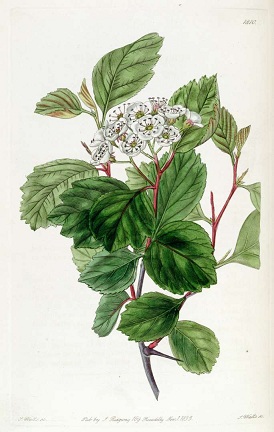
Historical Botanical Illustrations:

Black hawthorn illustrations