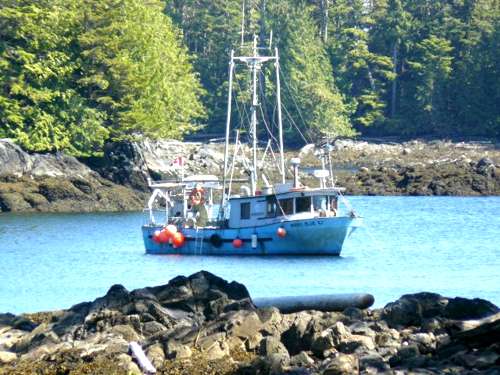
Ocean Eology uses a DGPS-positioned, towed video camera to collect imagery of the seabed (similar to the Seabed Imaging and Mapping System used by CORI). Typical tow speeds are between 0.5 and 1.0 knots. The camera provides a composite video signal to an overlay unit which stamps the DGPS position data (latitude/longitude), together with date and time, on each video frame. The video signal is also displayed in real-time on the vessel, where it is used to adapt the survey to particular features that are seen while underway. High intensity white LEDs are mounted on the camera to provide additional illumination when it is required.
The altitude of the underwater camera is controlled using a hydraulic winch which is operated from the bridge while monitoring the real-time video feed from the camera. Typically, the camera is towed approximately 1 m above the seabed.

Benthic video surveys are generally carried out as grid transects. Nominal shore-normal and shore-parallel transect line spacing ranges between 25 m and 100 m, depending on the degree of resolution desired. All shore-normal survey track-lines are continued inshore to about 5.0 m water depth or to the limit of safe navigation. Surveys are carried out to the maximum camera operating depth (approximately 150 m).
Below is some video footage showing a transect upslope through an orange sea pen bed.