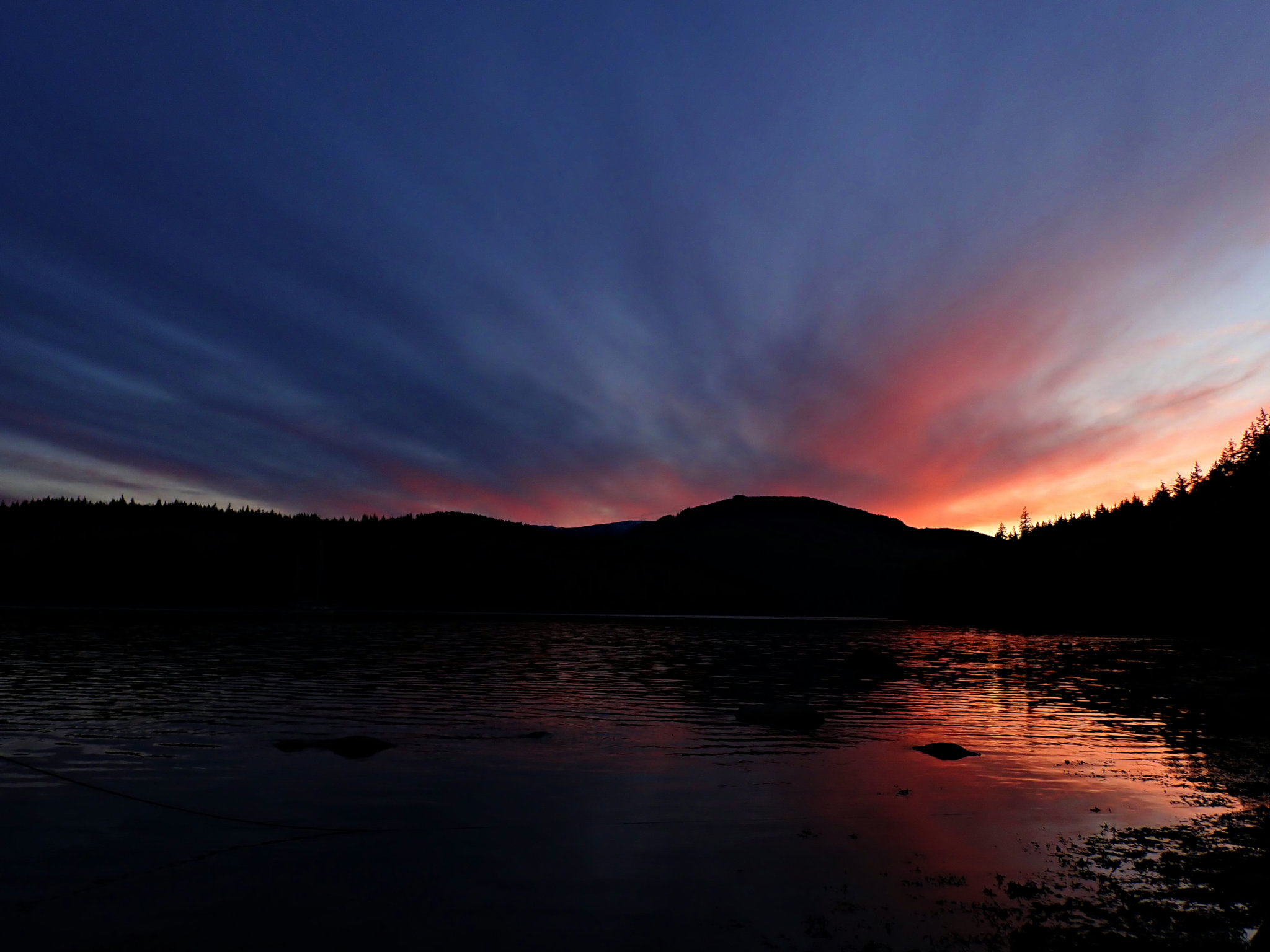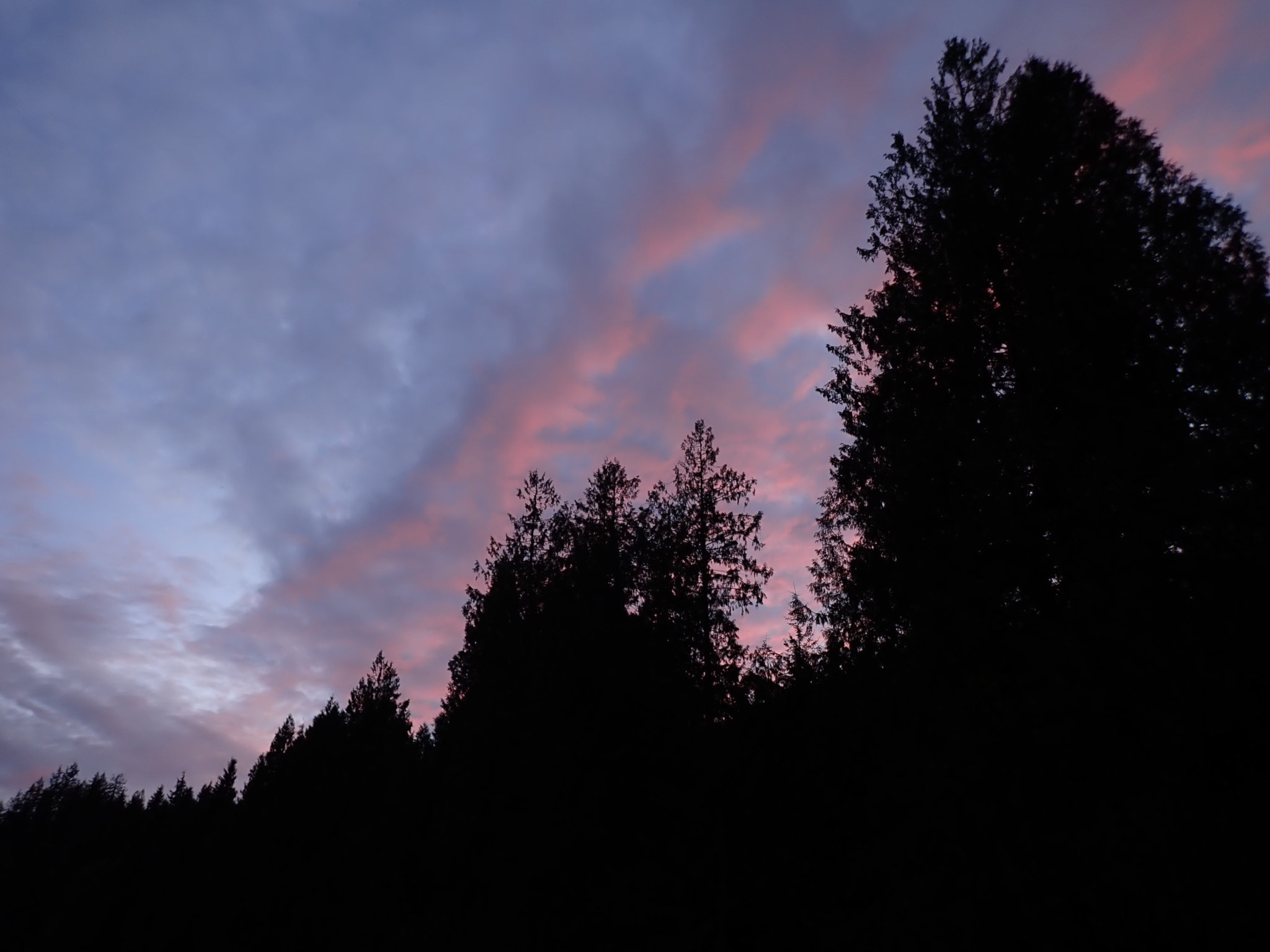
Living with nature brings both difficulties and great beauty. It is that which makes life worth living.
Birds and Gardens
It’s been another weird year so far. February and March were very grey and wet. When we did get a sunny day, the temperature dropped below freezing, although seldom below -5°C, and we got the occasional skiff of snow that quickly melted away when the rain and clouds returned.
There’s the possibility of a “super” El Niño coming later this summer/fall, and I’m not sure how that will affect us. Concerned about the possibility of early drought this year, we quickly filled our three water storage tanks before our seasonal creek stopped flowing. During March, while our reservoir was still full and the rain was still falling, we also managed to wash the house and windows (hadn’t been done for two years) and our kayaks (hadn’t been done in three years), knowing that we soon might have to go into water conservation mode (which is why we didn’t wash those things in the previous years). It looks like we will have water for awhile yet—I just don’t know for how long.
You know the old adage, “April showers bring May flowers“? Well, there may have been a few May flowers, but we certainly didn’t get much in the way of April showers. Instead, during April, the weather dried up, going from grey and wet to grey and windy. In fact, it got too dry … we had no rain for nearly a month. By the end of April, Vancouver Island was in drought, and our soil was dry and dusty. However, even though there was no rain, we had relatively little sunshine, with lots of fog and cloud. Spring refused to warm up, and nights were frosty well into May, which is very unusual for the Inlet.
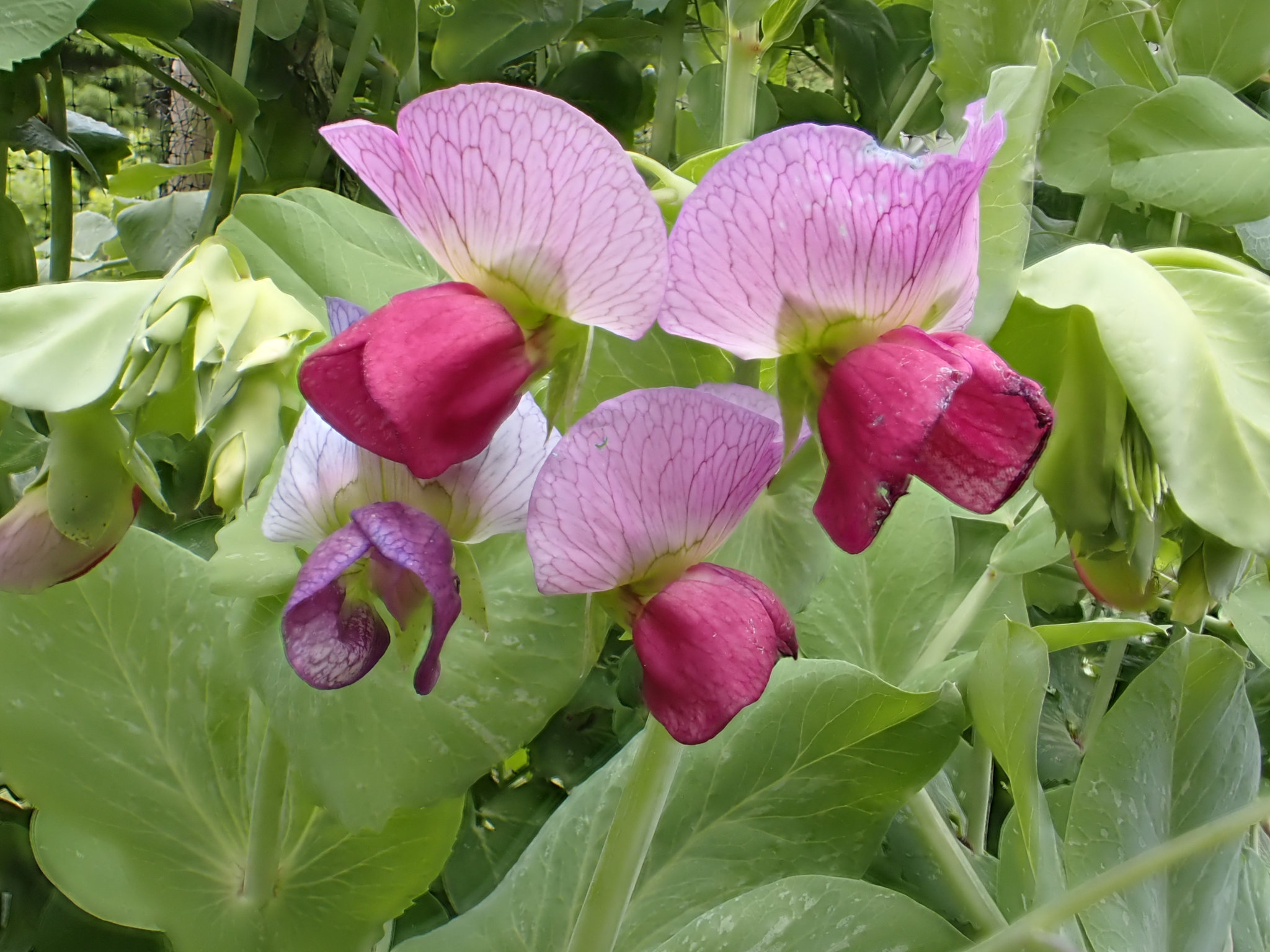
There was a lot of frost damage on trees and shrubs around the homestead, both wild and domesticated, with many branches killed just as they were starting to leaf out. We lost an apricot tree and a chestnut tree to the frost— frozen almost down to the roots. They are starting recover, but they have lost 5 years of growth in one bad spring! As well, most of our early flowering trees and bushes have little or no fruit on them this year. Surprisingly, my early plants—peas, garlic, and onions—have been reasonably productive, but I’ve had to water them through April, which is the earliest I’ve ever had to start irrigating.
Bird life around the homestead has been somewhat strange. In early April, there were lots of birds, many migrants passing through, and plenty of bird song. Then everything went quiet, and few birds were to be seen. I’m not sure exactly what happened, but I’m guessing a mismatch between migration and early bug hatch out. I think the heat dome down south may have encouraged many migrants to begin their northward journey early, only to arrive up here, where our weather has been so cold, to find that there were no bugs to eat. I don’t know where they all went … possibly they scattered out more widely to make the best use of what food there was, or maybe they tried to find something further up north. It was the end of April before we had our first major hatch of midges and other irritating biters. Happily, a couple pairs of violet green swallows had stayed behind to make use of our nest boxes, keeping the homestead mostly clear of mosquitoes and black flies, and fledging a bunch of youngsters in the process!
The seeds that I planted at the beginning of May during the dry weather didn’t do so well. When the weather did finally clear up, it got very hot! Between the dry wind and a couple of days of record-breaking heat, about 25% of the seed I planted didn’t germinate. I couldn’t keep the soil moist enough to encourage sprouting, and many of the ones that did sprout immediately perished in the wind or were eaten by flea beetles and slugs.
Happily, as May progressed, the birds returned, soon becoming quite vociferous. Then the dawn chorus really got going! We’ve had some interesting flock combinations … three cowbirds—two female and one male—hanging out with two collared doves, and a flicker that liked to pretend it was a robin!
Late May brought a bunch of rain—enough that our little seasonal creek was roaring with water again—and ended our spring drought. Almost immediately afterwards, we got days of strong northwesterly winds, with a few gusts that had us worrying about our roofs. There were lots of branches down, and a couple of small trees fell across our access road to the forestry main. Sadly, the wind broke the top off our hican tree. I’ve got it splinted and staked now, but unfortunately, that tree may have been shortened by 3 feet. The intense wind pretty much dried everything out, and even though the weather was quite cool, our reservoir went down very quickly.
Weather in May and June alternated between days that were extremely hot and days that were grey, cool, and drizzly. The salmonberry crop was very poor, and the local black bear is skinny and miserable. It spent most of May and June wandering around our fence line, looking for something good to eat.
What remains of my garden is pretty ragged and growing very slowly in the cool, damp weather. For the first time in quite a few years, we’ll be buying vegetables instead of growing all of our own. Geeze, I sound like an old farmer, complaining about the weather and the crops!
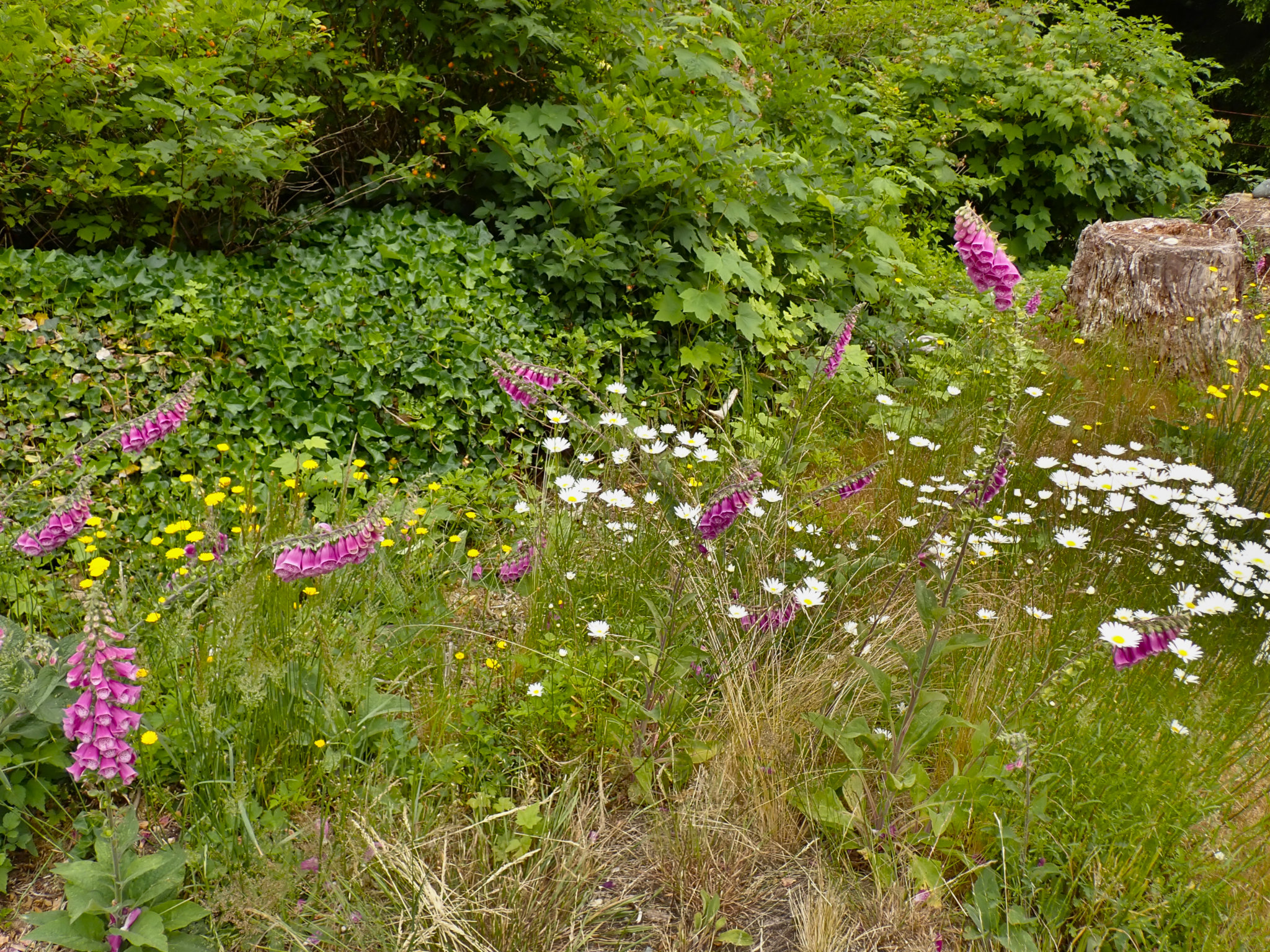
On the positive side of things, in spite of the weather, the homestead is a vibrant green and filled with bird song. There have been at least two clutches of violet green swallows fledged from our nest boxes, and a pair of barn swallows tried to get in on on them as well (without any real success). Pretty much all of our regular birds are back for the summer and busy making nests and hatching eggs. The rufous hummingbirds were a wee bit late to hatch out young ones, but now they are busy buzzing all around the yard. The garden and meadow are in full blossom, and huge swallowtail butterflies drift about lazily. We have lots of bumble bees and bee flies hard at work doing the business of pollination. It seems that nature is determined to keep to its schedules regardless of the weather.
Sadly, as expected from the late frosts, our raspberries and currants had poor crops (the raspberry canes, which are usually over my head, were barely 3-4 feet tall). The currants were slow to ripen, and by the time they started getting ready for picking, the currant fruit flies had hatched out and the berries were already full of maggots. We pretty much left what crop there was on the bush. However, since the wild salmonberry crop was also very poor, the birds, especially purple finches and cedar waxwings (we call them “masked bandits”), cleaned the currents up and stripped most of the Saskatoons as well. This is quite unusual, as normally the birds don’t touch the currants, and the ones that we don’t pick hang on the bush until the beginning of fall.
Another positive thing—we’ve had the best crop of strawberries and cherries ever. I was even able to dry them and make strawberry and cherry jam—a first, since usually these fruits get consumed fresh before they can be preserved! The apple and plum crop is also doing better than I thought it might.
The wet, cool, and frequently windy weather we’ve had during June and the beginning of July is, at least to me, completely unexpected for a “super” El Niño year. I’m waiting for the “other foot to fall”, as they say, and for the predicted hot, dry weather to arrive. In the meantime, I’m happy to have the rain and our reservoir full of water.
This spring, I got something I’d been pondering about buying all winter—a battery powered lawn mower! I’ve been “mowing” a couple of acres of yard with a weed wacker for some years now. This was a slow and painful (tendonitis in the elbow) process, and I’d finally gotten completely irritated by it. However, I never thought I would get a lawn mower. I’d hoped the little two wheeled tractor would suffice, but it is not agile or small enough to get in and around the buildings, trees, and gardens where space is tight.
I’ve been mowing the yard with the new mower for a couple months now, and it works like a charm! I didn’t think I would ever love mowing again (I used to do it in Prince Rupert more than I liked), but it is so much easier to cut grass with a maneuverable mower than a weed wacker! And the mower can cut an amazing amount of grass on a single battery (we bought a spare anyways). Best of all, I’ve been bagging the grass clippings, and they make great mulch around the trees, providing nutrients as they decompose, protecting the soil from drying out in the wind, and keeping the weeds at bay. I never thought a lawn mower would be so useful!
A Walk on the Beach
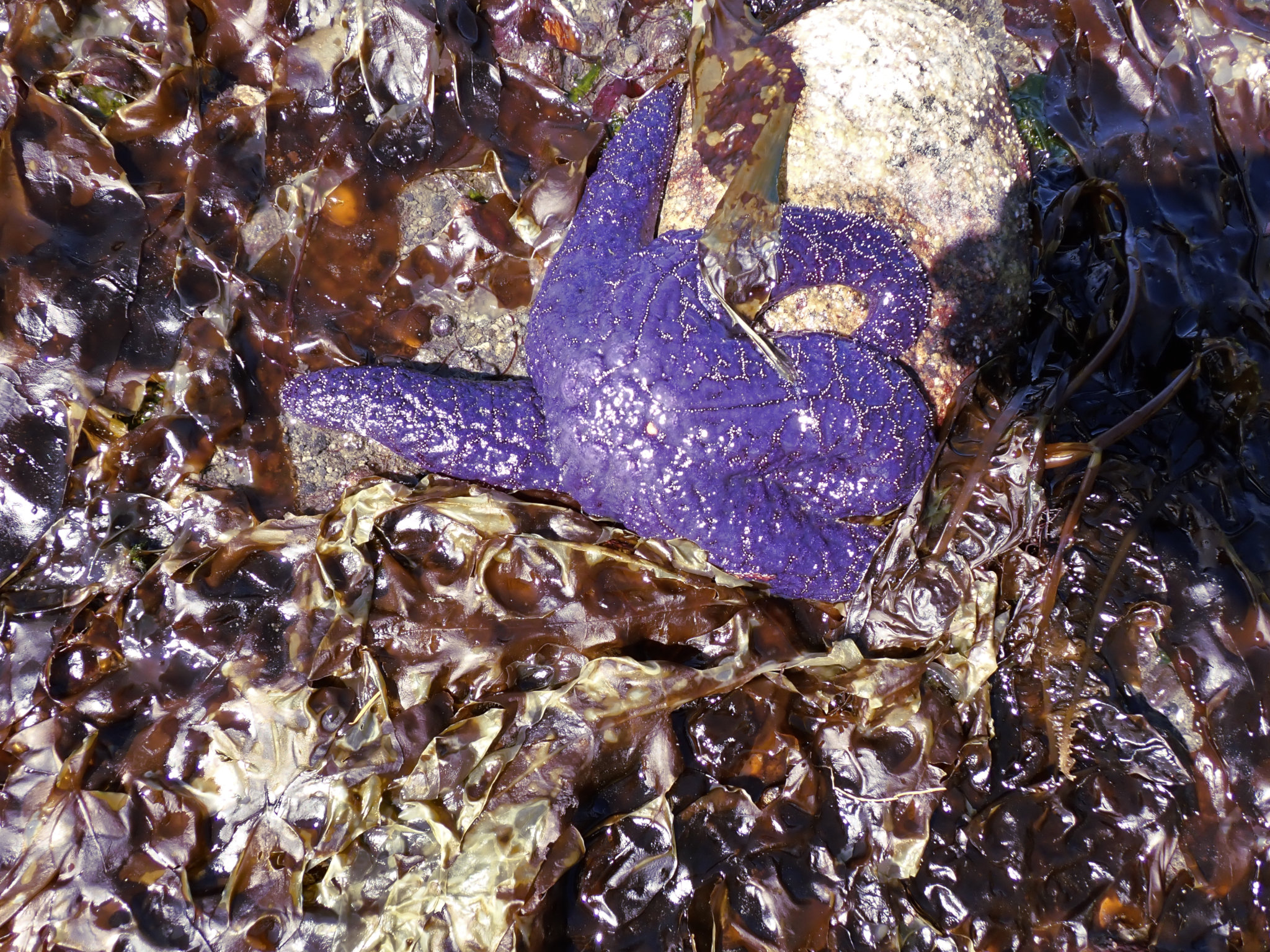
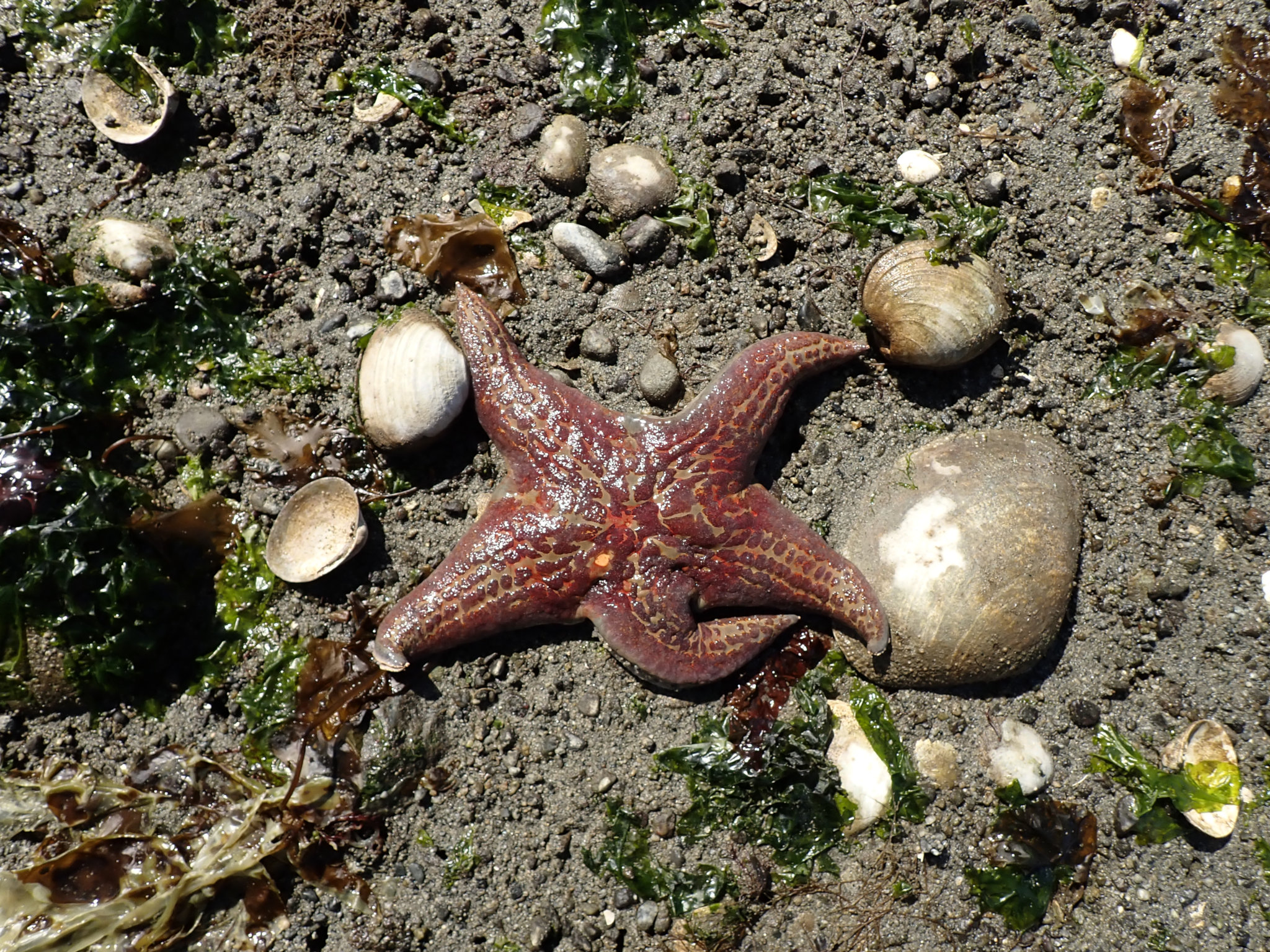
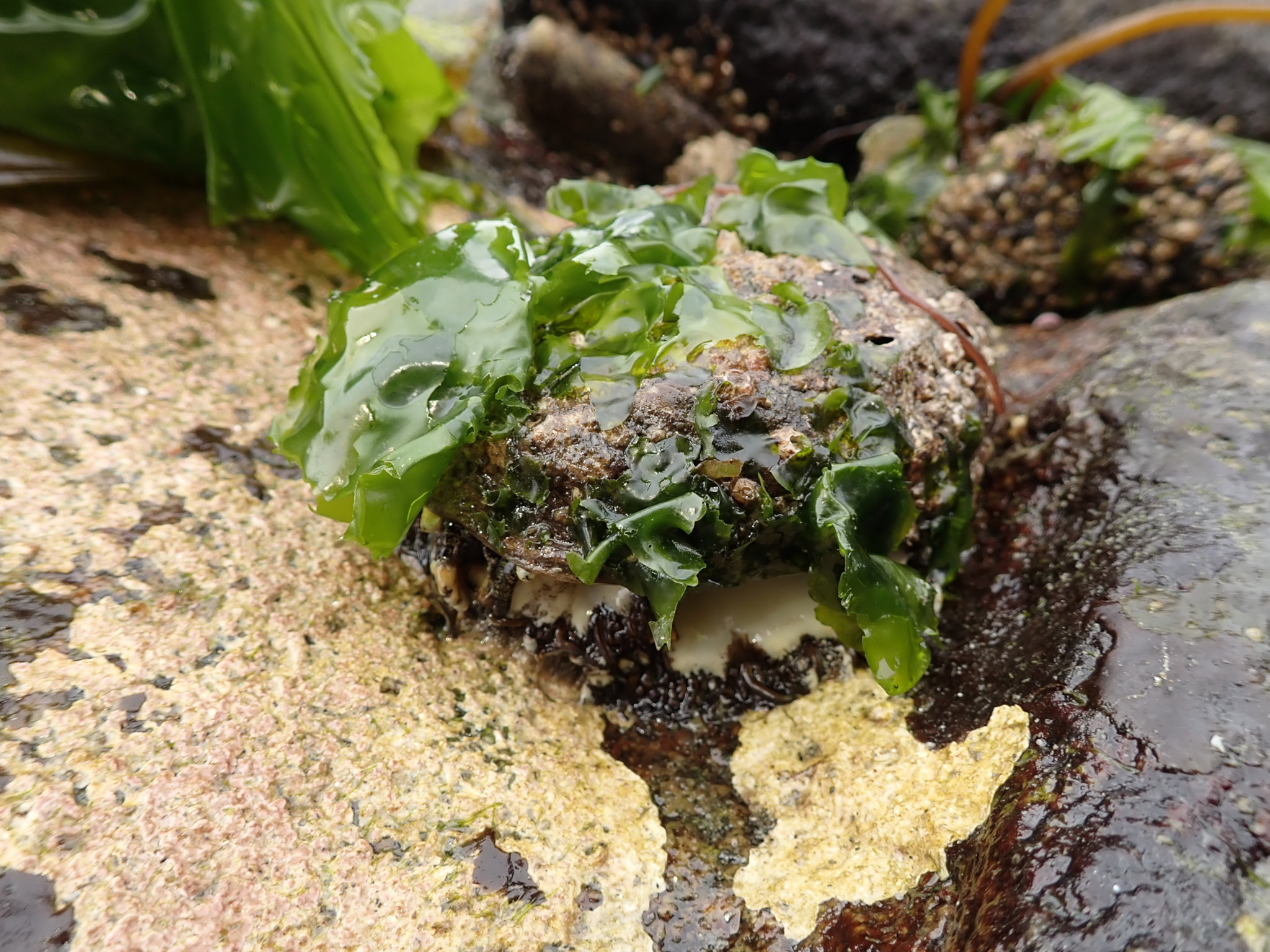
A sunny morning coincided with a very low tide, making conditions perfect for a wonderful intertidal walk. When we first arrived in Port Neville Inlet, the diversity of the intertidal zone was amazing. Then we were hit by the seastar wasting disease, and some years later, by a heat dome during spring tides, which cooked many of the intertidal organisms. Sadly, this has significantly impacted the diversity of our beaches. However, we were happy to see the seastars making a comeback during the last couple years, and we can even spot the odd abalone, a very rare creature indeed!
Beauty Around the Homestead
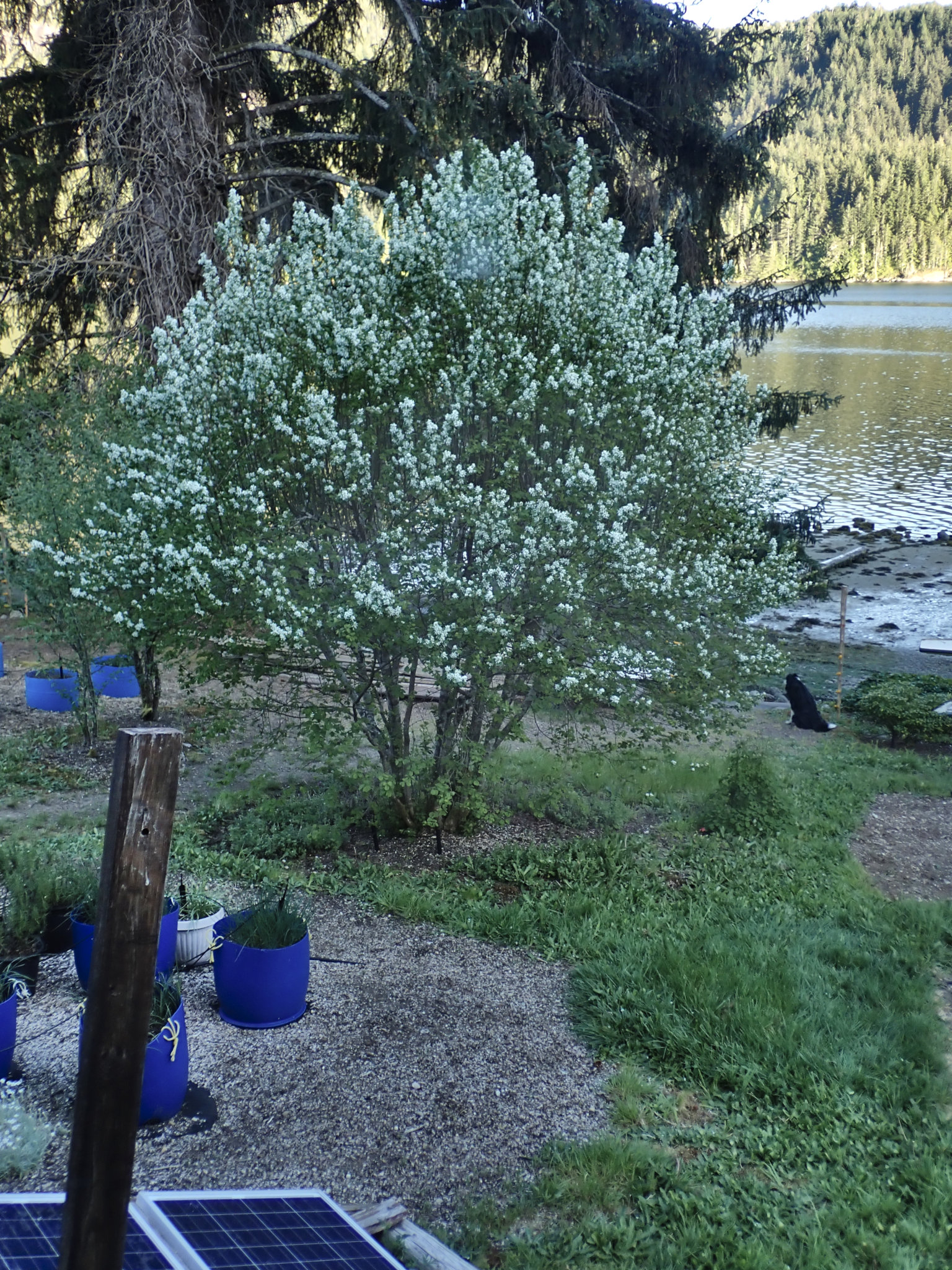
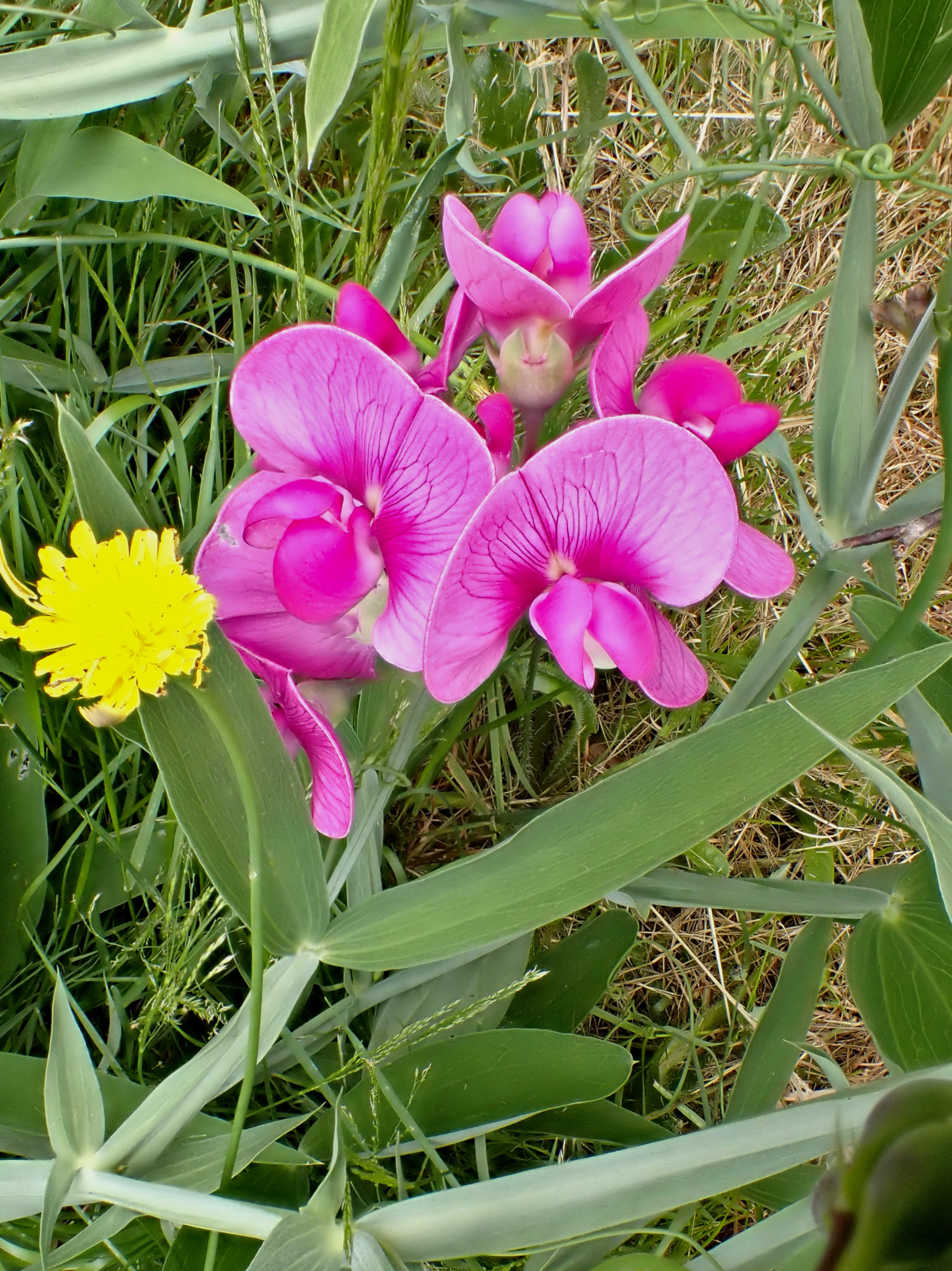
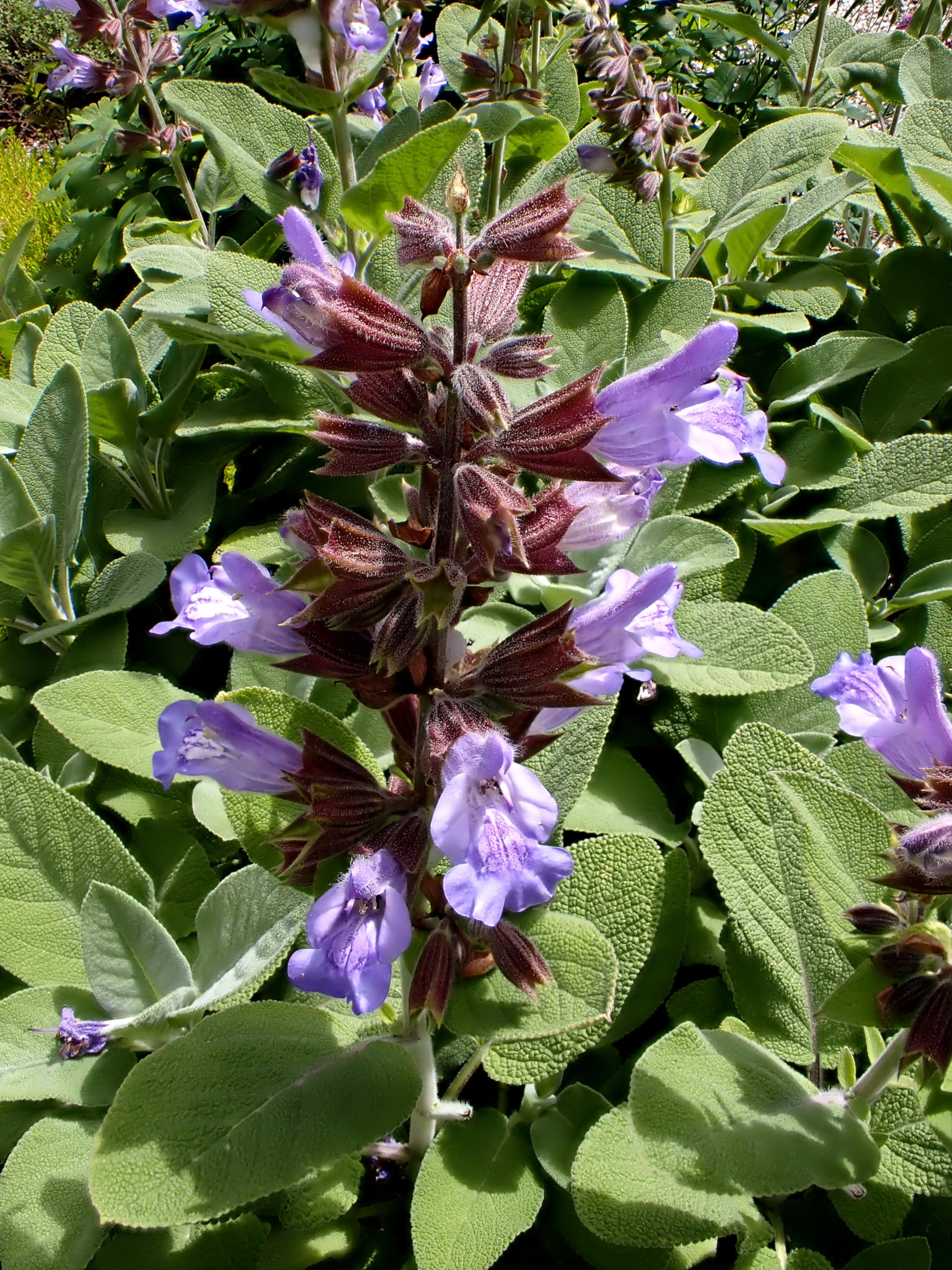
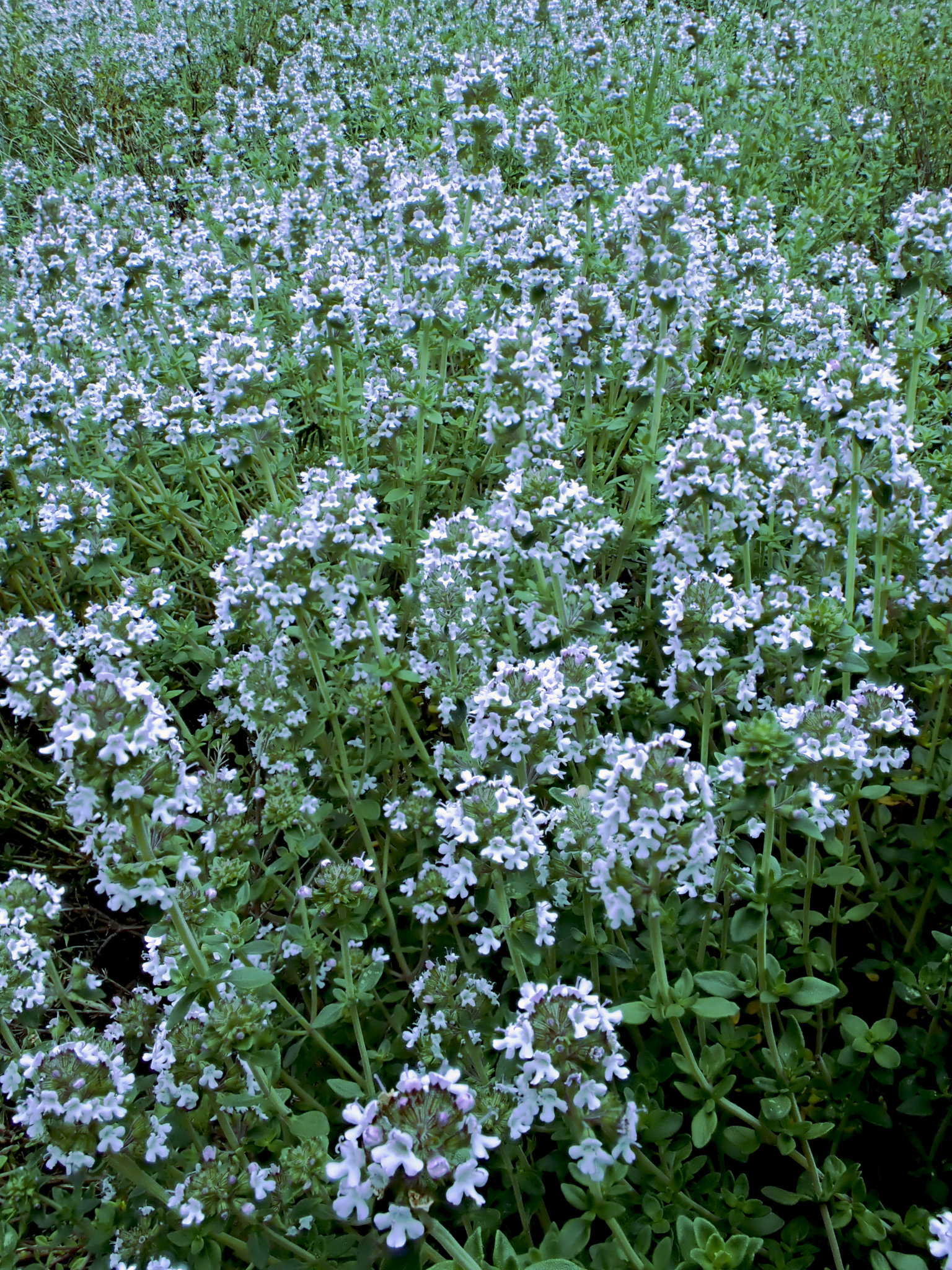
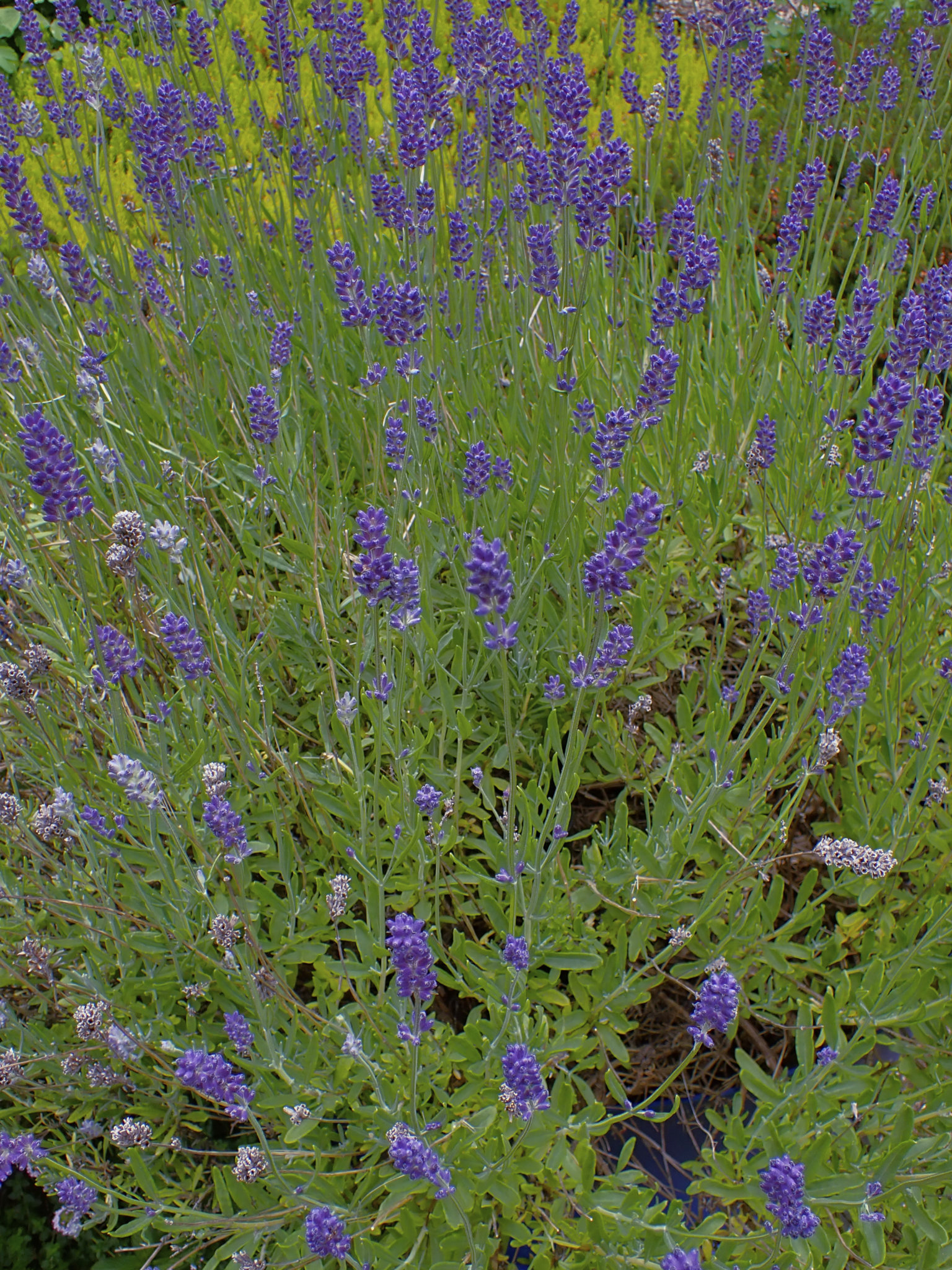
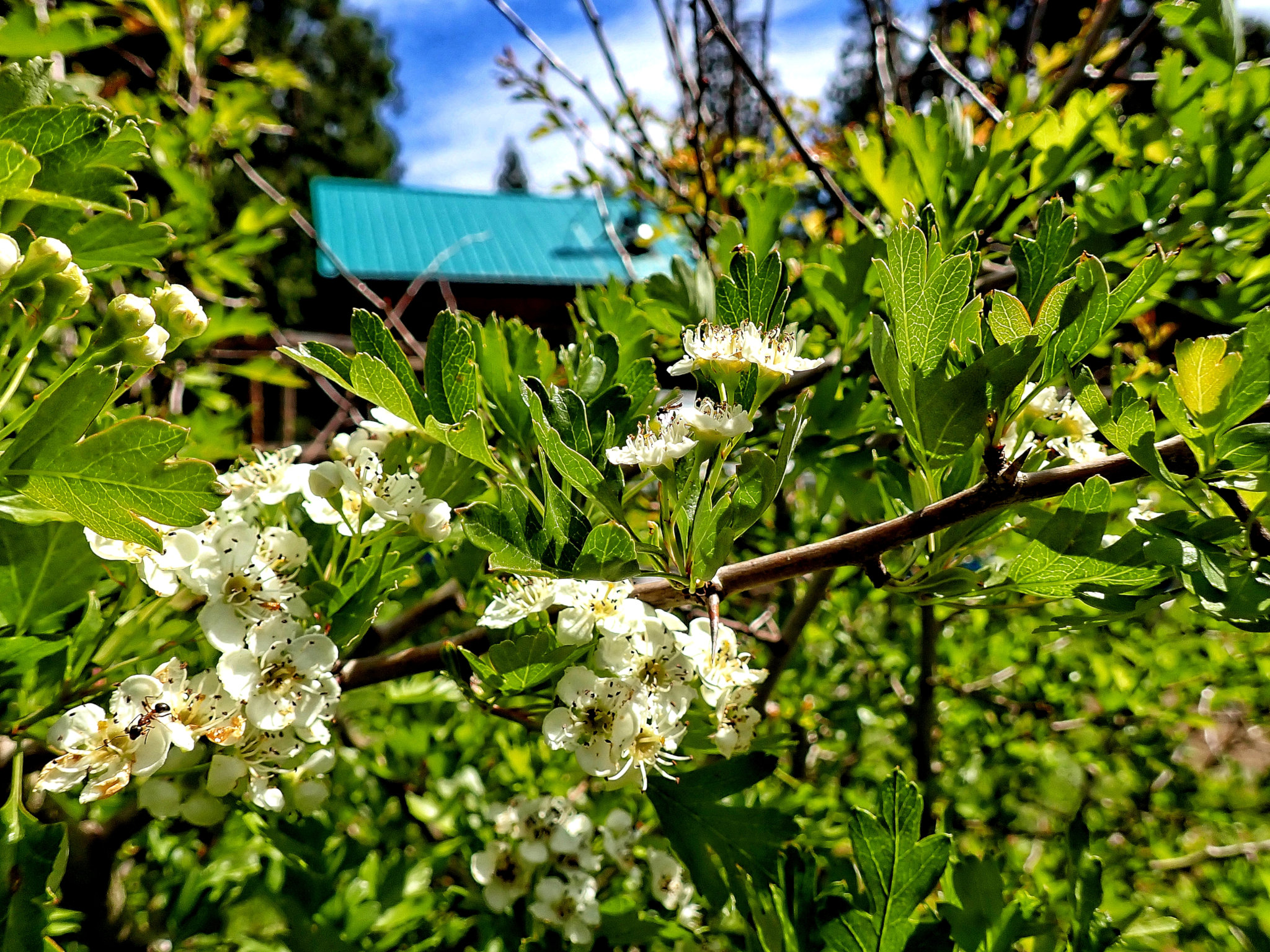
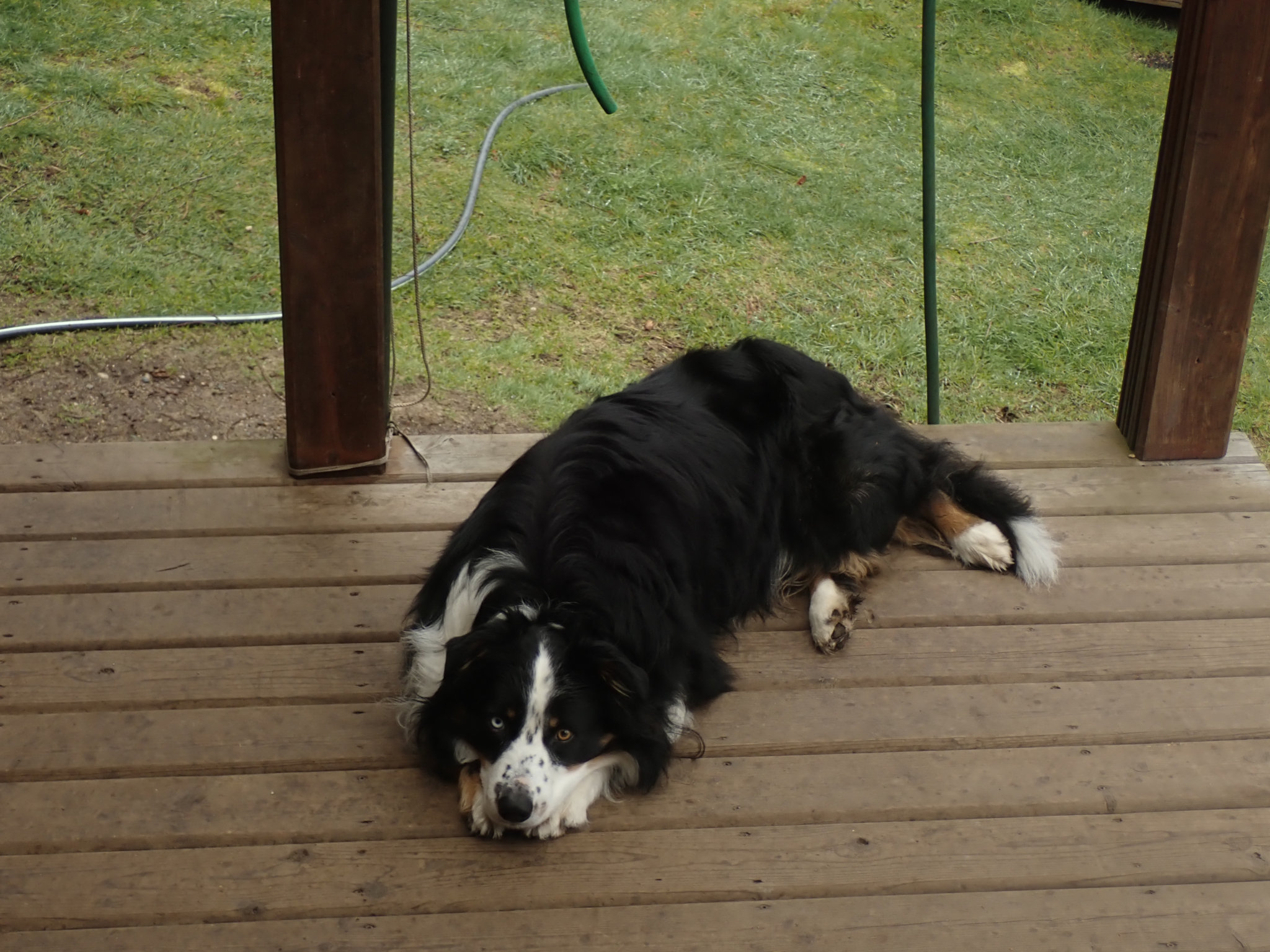
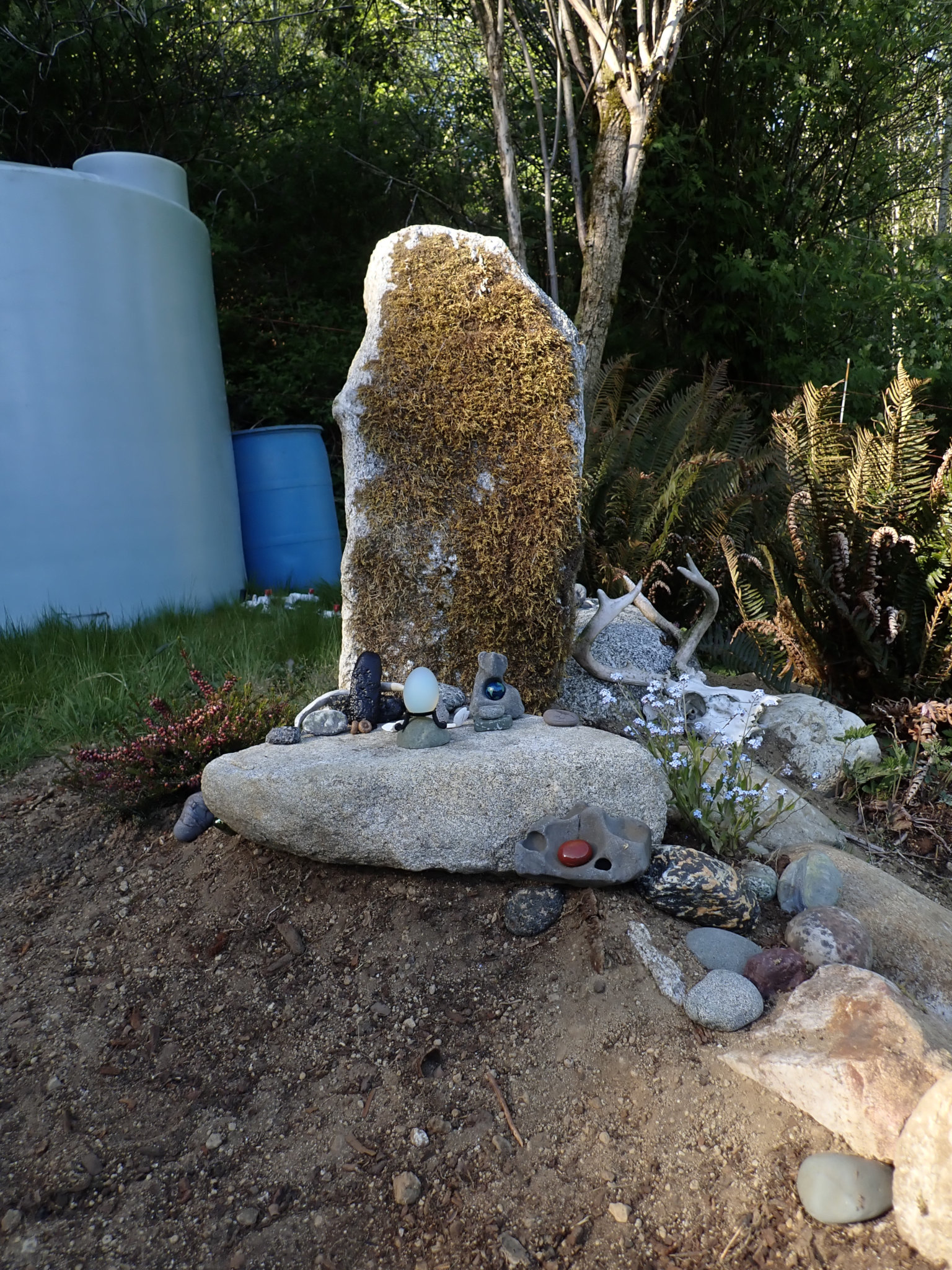
Here are a few photos that Ken has taken around our homestead showing that even when the weather is difficult and the work is hard, there is still great beauty to be enjoyed.
And here’s another amazing sunset to end this blog with!