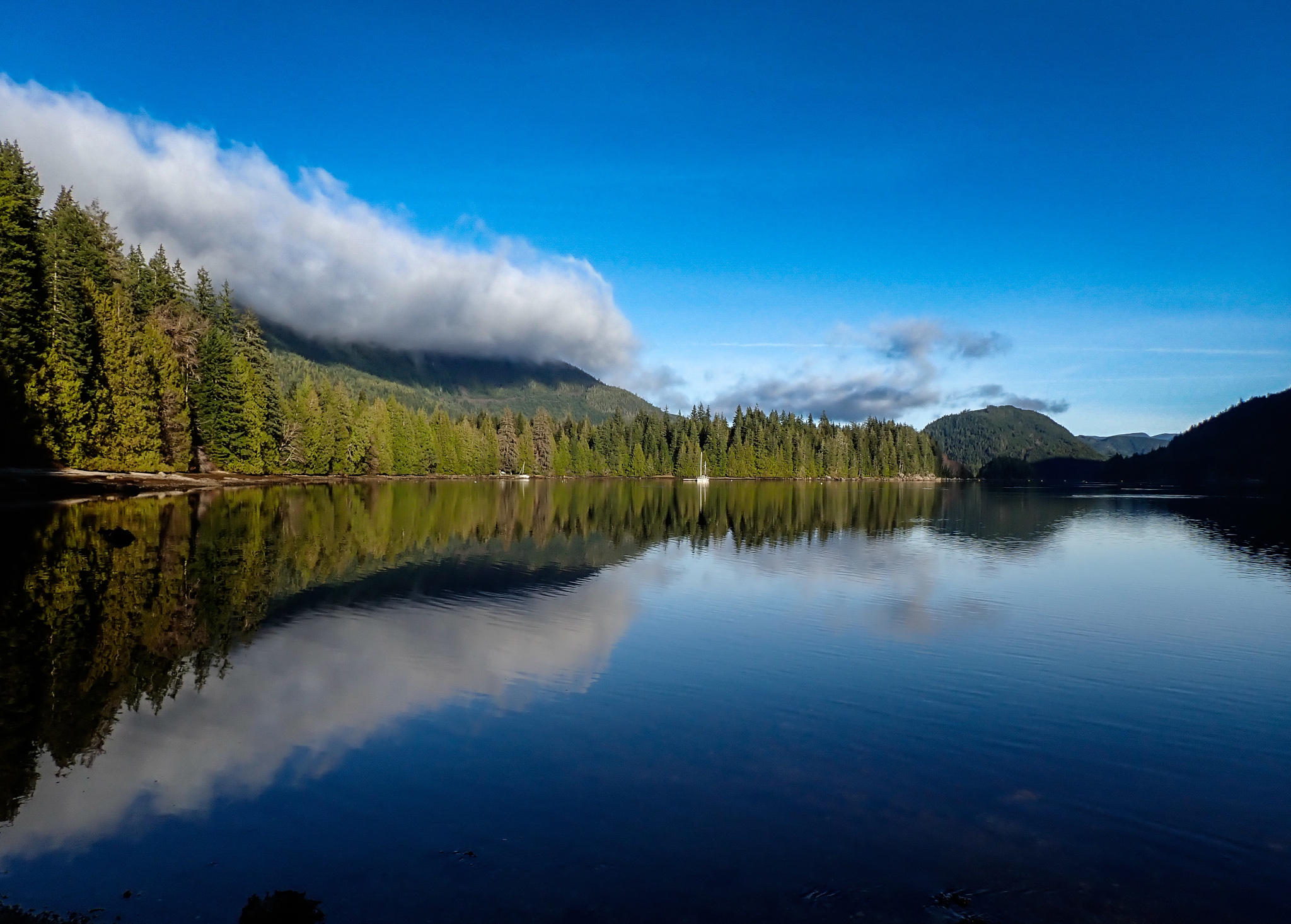
Here’s a little story about our homestead, written in the mythic style. It’s called Tir Ceòlmhor—The Singing Land.
The Land remembers. Carved deeply into her bones, etched upon her body, the memories remain. She remembers the Ice—heavy sheets that ground, scoured, and carved. She was shaped by the Ice, her valleys steepened, broadened and deepened, her mountains rounded and flattened. Eons passed in near darkness, the only sound the deep groaning vibrations of the Ice moving.
Finally, the Sun drew nearer and warmth returned. The Land could barely perceive this, but the Ice knew its season was done. At first, the only sounds were musical trickles of water flowing through cracks and drips echoing down deep crevasses, but soon these became murmuring cascades. Merging together, the streams grew into mighty rivers that gushed out of walls of ice in great thunderous falls. The roar of water went on and on, almost as long as the Ice had once groaned. And then that too was over.
The Land was left bare, naked in the hot sun, empty of life. Water worn boulders of ancient granite, heaps of rounded colorful pebbles, and great mounds of rocky debris adorned her barren body. It was time for rebirth.
A period of quiet lay over the Land. Only the Wind sighed sadly overhead. But those lonely gusts carried new life to the Land—spores of fungi, lichens and mosses—that grew on the stony slopes and valley floor, creating the first new soil. As the Ice drew back even further, the Sea rose and flooded the valley, drowning the River and creating the Inlet. Soaring on thermals high above the water, birds flew over the Land, often bringing seeds from afar to grow a new cloak of lush green for the Land.
Ferns spread across the moss-covered ground, quickly followed by forests of pine, alder and hemlock. As the Land became lush and fertile again, the animals migrated from their refugia where they had hidden from the Ice. Soon there were mice, mountain goats, mammoth, short-faced bear, brown bear, black bear, caribou, and many other species. Their presence shaped the Land further, enriching her soils and creating niches for more new plant species. Fir, spruce, birch, and yew made their homes in the valley. Birds built their nests in the trees and shrubs, and their songs filled the Land with joyous music.
Strange new beings came to the Land from far, far away—fire-starters, tool-makers, story-tellers. Like the Land, these humans were also ones who could remember, passing on their stories from generation to generation. At first, they were nomadic and few in number. They learned to live in harmony with the Land, only taking what they needed and moving on. They hunted megafauna—mastodons, mammoths, giant bison—great creatures that roamed the Land. Naming the Land, they sang her into their stories, preserving the memories for their descendants. But as the Sun warmed the Earth further, the megafauna became extinct. The humans had to find new ways to survive.
The forests also changed and grew. Red cedar—the great tree of life for the aboriginal people—spread northward. Salmon swam up the Inlet and spawned in the lake at the headwaters of the river, giving the people a new source of food. Some chose to stay in the Inlet; others remained nomadic.
Thousands of years passed, and the humans lived as one with the Land. They learned to make houses, clothing, and utensils from cedar, to create beautiful wood carvings, to flake arrowheads and spears from flint and obsidian, to chip petroglyphs into the flat shoreline rocks. But gradually they forgot the ways of reciprocity with Nature. Their numbers grew and food became scarce as they took more from the Land than they gave back. Weakened, they were overcome by the stronger nomadic tribes.
Time seemed to speed by more quickly. Change that once was measured in thousands of years was now measured in hundreds. The nomadic tribes came and went, leaving pictographs on the rock walls. A new variety of human walked the Land, arriving in great vessels from over the Seas. They surveyed and measured, seeking resources of value, but caring little for the Land. Soon she was divided and sold to the highest bidders. Her massive cedars and spruce fell to the axes of the loggers, dragged off by teams of horses to make spars and booms for the great sailing ships, leaving behind cleared pastures and stumps large enough to dance upon.
The Land struggled on. Like jewels missing from a crown, she was bereft of her most beautiful treasures—her ancient old growth trees. Considered worthless by those who sought wealth, she was sold to a homesteader for a dollar. He lived on the Land in a small cabin. Using the rounded boulders left behind by the Ice, he built paths, gardens, berms, and groins. His story has been lost, but his mark upon the Land remains. During his stay, the Land began to heal, and her remaining trees grew thick and tall.
However, human greed has no limits. Populations boomed, houses were built, and now lumber was the commodity of the day. The Land’s thick green coat of hemlocks brought the loggers back. Cruelly, she was shorn, left naked, abused, and unwanted.
Still the Land persisted. Wind born alder seeds fell upon the bare soil. These seeds sprouted into rapidly-growing trees that covered her nudity in a different shade of green—brighter, younger. Salmonberry, thimbleberry, and swordfern flourished underneath the thin forest canopy. Other trees gradually reappeared—maple, cherry, elderberry, poplar. Hidden in the ravaged soil were the seeds of hemlock, spruce, cedar, and fir. Nursed by the alder, they formed a secret understory of conifers.
The renewing Land brought the birds, attracted by the open mixed forest and the abundance of berries. As the trees once again covered the slopes, deer, bears, cougars, and wolves returned. Two vagrant human wanderers, tired of the disconnectedness and greed found in human cities, settled on the Land, like flotsam thrown up by the tides. They made their home by the shore of the Inlet, learned the seasons and moods of the Land, planted trees and grew gardens. The birds sang to them, from the tall trees in the summer and from seashore in the winter. Celtic diaspora, they reached back far into their ancestral memories and named the Land they loved—Tir Ceòlmhor—the Singing Land.